
Most deck problems do not start with the boards you see. They start below them. In this guide, you will learn how deck drainage, weak ledger flashing, and bad framing lead to rot, movement, and expensive repairs.

Why deck drainage, ledger flashing, and framing matter more than the surface boards
A lot of homeowners focus on the part of the deck they can see. That makes sense. Color, board pattern, railing style, and lighting are exciting. But the truth is simpler than that. A deck usually fails because of what is happening underneath or where it connects to the house. The American Wood Council guide for residential deck construction calls for corrosion resistant flashing at ledger connections to wood framed walls, and it also says the siding or exterior finish must be removed before the ledger is installed. Trex makes the same point in plain language, noting that proper flashing and attachment help prevent rot and water damage that can weaken the deck to house connection.
And that is why this topic matters so much for homeowners in Charlotte, Huntersville, Lake Norman, and nearby communities. A deck can look clean on top and still have moisture trapped below, weak detailing at the ledger, or framing that was sized or connected the wrong way. When that happens, the repair bill usually arrives later, not sooner. By then, it is rarely a small touch up.
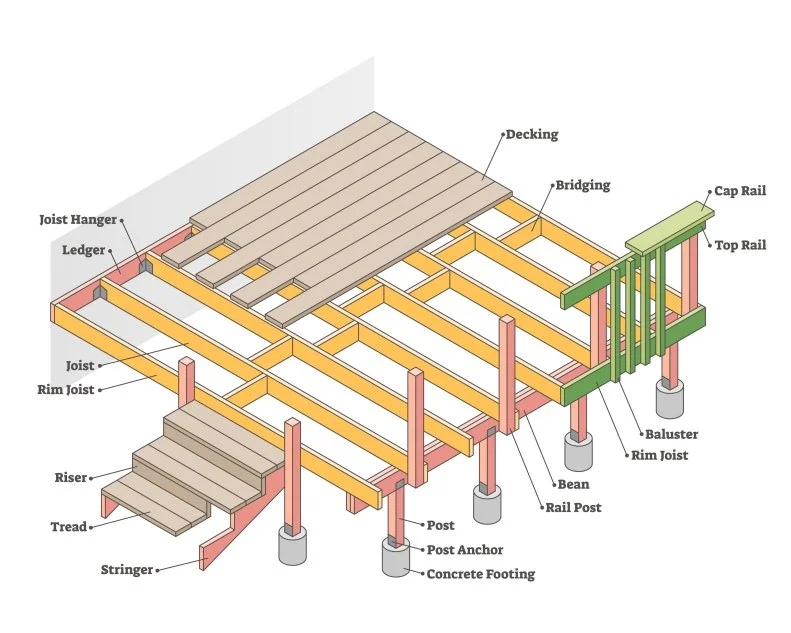
Based on guidance from the American Wood Council, Trex, and Fiberon, here is a simple homeowner view of the three trouble spots.
Deck drainage: where water goes after the rain matters
When people hear the word drainage, they sometimes think of a fancy drainage system or a gutter style add on. But basic deck drainage is really about something more everyday. Water has to move off the boards, through the gaps, and away from the framing below. Trex says deck boards need proper gapping for drainage and that all decks need air circulation to help them stay dry. Fiberon says there must be adequate cross ventilation and unobstructed airflow under half of the deck, water must be able to flow away from below, and decking should not be installed directly over an existing or solid surface. For decks with limited ventilation, Fiberon says six inches of clear ventilation is required.
That sounds technical, but it plays out in very normal ways. Maybe water sits near the house after every storm. Maybe the area under the deck stays muddy even when the yard around it dries out. Maybe the fascia starts to look tired before it should, or the underside smells a little musty in warm weather. Those are not random annoyances. They are usually signs that moisture is hanging around longer than it should. And when moisture lingers, the structure pays for it.
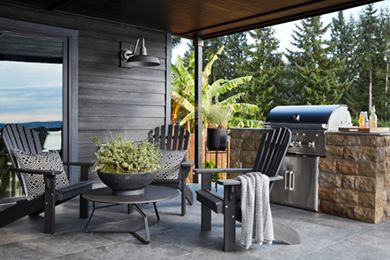
This is also where homeowners get misled by surface upgrades. New boards can make an old deck look fresh, but they do not fix trapped moisture under the frame. In fact, Fiberon says an existing substructure should only be reused when it is free of damage or decay, the joists are spaced correctly, and ventilation and drainage conditions are still adequate. So if the builder never talks about airflow, spacing, or the condition of the framing, that is a warning sign.
There is one more detail worth slowing down for. Under deck waterproofing can be useful, especially if a homeowner wants a dry patio or storage space below. But it has to be planned well. Fiberon warns that under deck waterproofing installations that do not provide the required unobstructed ventilation can contribute to heat buildup and damage. In plain terms, adding a system under the deck is not automatically a win. If it blocks airflow or traps moisture, it can create a new problem while trying to solve another one.
That is why planning matters so much on the front end. Good Custom Decks are not just attractive on top. They are built so water has somewhere to go. And honestly, this is one of the best reasons to use 3D Renderings during design. They help you see the layout, stairs, transitions, and drainage paths before construction starts, while changes are still easy.
Ledger flashing: the small detail that protects the whole connection
If drainage is about how water leaves the deck, flashing is about how water stays out of the house. And around here in the Carolinas, that matters more than most people realize. The ledger is the board that connects many decks to the home. If water gets behind that area, it can damage the wall assembly and weaken one of the most important structural connections in the whole project. The American Wood Council requires approved corrosion resistant flashing at ledger connections to wood framed walls. Trex goes further in its installation guidance and says the ledger should never be attached over siding or directly to cladding like brick. Instead, the ledger should anchor through the wall sheathing into the rim or band joist, with proper back flashing, top flashing, and overlap with the weather resistive barrier.
A simple way to picture flashing is this. Think of it like a rain jacket for the most sensitive seam in the project. Water will always try to follow gravity and sneak through openings. Flashing tells it where to go instead.
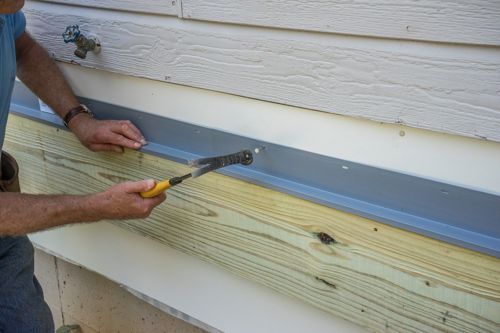
When it is done well, water passes over the connection and away from the wall. When it is skipped, cut short, or installed in the wrong order, water can work its way behind the ledger where you cannot see it. And that is when small stains become rot, soft sheathing, or a repair that reaches beyond the deck itself.
This is also why so many homeowners miss the problem at first. The deck boards may still look fine. The rail may still feel solid. But maybe a door threshold nearby starts acting strange. Maybe trim next to the deck looks swollen. Maybe the deck feels slightly loose near the house after a wet season. Those symptoms do not always scream flashing issue, yet that can be exactly what is happening. Trex notes that long term water management matters because even a good installation can fail if water is allowed to collect above or behind the ledger.
Material compatibility matters too. Trex notes that aluminum flashing should not sit directly against treated wood without a separating barrier. The American Wood Council commentary similarly warns that aluminum flashing should not be used where it will be in contact with certain treated lumber because corrosion can result. It is a small detail, but small details are often where expensive deck repairs begin.
And here is an important point that homeowners rarely hear early enough. The American Wood Council says that if the house conditions differ from the prescriptive ledger details, or if the band joist cannot be verified as capable of supporting the deck, a freestanding option is sometimes the smarter choice. Not because it is trendy, but because the house connection may not be the right place to rely on.
Deck framing: why a deck can look beautiful and still feel wrong
Framing is the skeleton of the deck. It controls how the deck feels underfoot, how the load moves through the structure, and how well the finish materials hold up over time. When framing is done right, the whole project feels calm and solid. When it is done poorly, homeowners notice bounce, movement, squeaks, gaps opening up at picture frame borders, and stairs or rails that never quite feel right.
The American Wood Council guide lays out very clear prescriptive rules for framing. Joists have to connect to beams using approved methods. Joist hangers need minimum capacities and corrosion resistant fasteners. Posts are required to be 6x6 nominal or larger under the prescriptive limits in the guide. Beam attachment to the post must be done through notching or an approved post cap, and attaching the beam to the side of the post without notching is prohibited. On the decking side, Trex says joist spacing must follow the span chart, the structure must be level and plumb, and deck boards must span at least three joists. For many residential deck boards, that means 16 inch on center spacing, while angled patterns require tighter spacing.
That may sound like builder talk, but homeowners feel the results right away. Have you ever stepped onto a deck that looked fine in photos but felt springy in person? Or noticed a border board that keeps separating at the corner? Or a railing post that does not feel fully settled? Those are often framing conversations in disguise. The surface is just reporting what the structure underneath is doing.
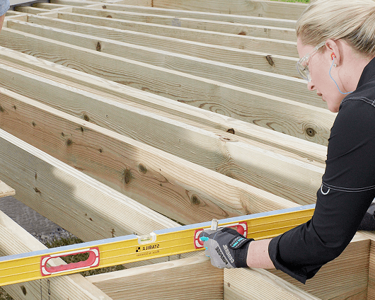
Framing also has to match the way the deck will actually be used. A quiet sitting area is one thing. A large dining zone, built in bench, grill station, planter grouping, or fire feature is something else. Trex specifically says to plan ahead for proper joist spanning when heavy items such as hot tubs or planters are involved. So when a builder talks only about color and board style, but not about how the space will be loaded, they are skipping part of the real job.
And this is where good process separates strong builders from rushed ones. A thoughtful builder will explain the framing plan in words you can understand. They will show where water goes, how the ledger is protected, what the joist spacing is, and why certain support choices were made. That is a big part of what homeowners should look for when comparing Our Process, reviewing the Gallery, or discussing Custom Decks with any contractor.
A helpful way to vet that conversation is to ask a few simple questions before the build begins.
Those questions are simple, but they tell you a lot. A good answer is usually calm, specific, and easy to follow. A weak answer is often vague, rushed, or focused only on the finish materials.
Which problem becomes the most expensive?
If we had to pick just one, poor ledger flashing is often the most expensive because it can damage both the deck and the house at the same time. Water intrusion near the ledger can stay hidden for a long time, and by the time the issue becomes obvious, the repair may involve siding, sheathing, framing, and the deck connection itself. But that does not mean deck drainage and framing are secondary. Poor drainage keeps the whole structure wet longer, and weak framing can make the deck feel wrong from day one while also reducing how well the finish materials perform.
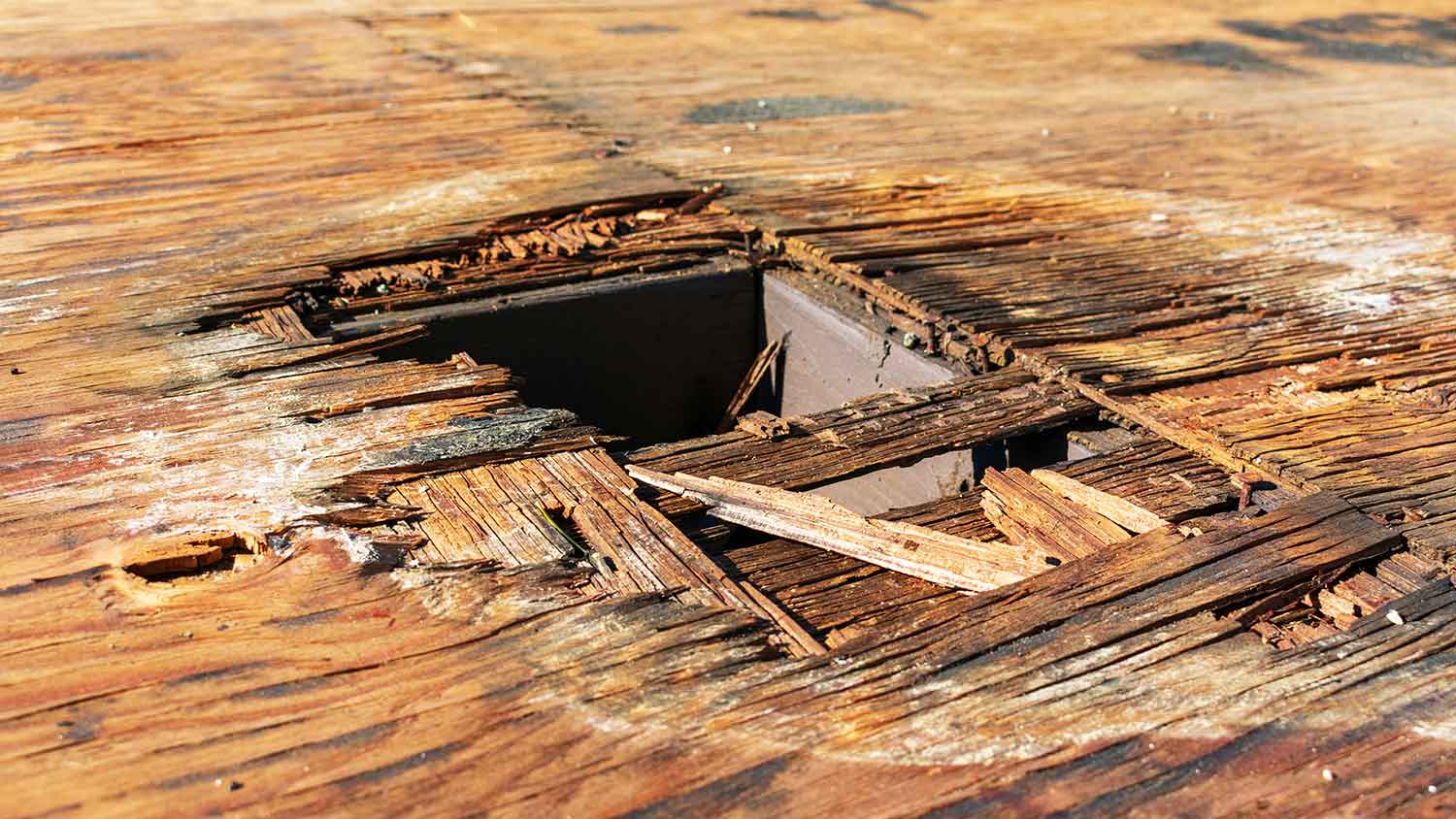
In real projects, these three issues usually overlap. Water gets behind the ledger because flashing is weak. The framing stays damp because the deck cannot dry well. Then movement shows up because the structural details were never robust enough to tolerate years of moisture, temperature changes, and daily use. That is why patch jobs so often disappoint people. They solve the visible symptom while leaving the real cause in place.
That same logic applies when homeowners consider resurfacing instead of rebuilding. Sometimes resurfacing is absolutely reasonable. But only when the existing framework is still sound. Fiberon says existing framing must be free of damage or decay, joists must be spaced correctly, and ventilation and drainage still need to be right. So a surface replacement without structural inspection is not really a plan. It is more like crossing your fingers.
A smarter next step for homeowners in Charlotte
If you own a deck in Charlotte and suspect something is off, start with the hidden areas. Look underneath after rain. Check the connection near the house. Pay attention to lingering dampness, soft trim, bounce, or movement near railing posts and stairs. You do not need to diagnose every detail yourself. You just need to notice the clues before they turn into a much larger repair.
It is also worth remembering that deck work is not only a design decision. It can be a permit and review issue too. Mecklenburg County Code Enforcement says permits are required for residential work related to new construction, reconstruction, alteration, repair, and certain load bearing changes. The City of Charlotte specifically lists deck projects among those requiring concurrent Mecklenburg County and City permit review in the applicable process. So if a project involves a new build or meaningful structural work, it is wise to verify the requirements early instead of learning about them halfway through the job.
That is one reason homeowners benefit from looking at more than finished photos. When you review a builder's Gallery, ask yourself whether you can also see evidence of planning, structure, and execution. When you read about Our Process, look for signs that the builder talks about moisture control and framing, not just aesthetics. And when you are still deciding what to build, 3D Renderings can make those hidden decisions easier to understand before the first board is installed.

Conclusion
The biggest deck mistakes are rarely dramatic in the beginning. They are quiet. Water sits where it should not. Flashing is skipped because it is hidden. Framing gets value engineered into something that looks acceptable but feels light under use. Then a year or two passes, and the deck that once looked like an upgrade starts asking for repairs. That is why the smartest homeowners do not judge a deck only by the top boards. They judge it by how well the unseen parts were designed and built.
If you are planning a new outdoor space or wondering whether your current deck needs repair or a more complete rebuild, it helps to browse a real Gallery, compare how different builders explain Custom Decks, and use Get a Quote when you want a clear second opinion before a small issue becomes a bigger one.
Related Articles

Spring Maintenance Checklist for Your Deck and Porch
As winter fades and warmer days return, it’s time to get your deck or porch ready for spring. After months of exposure to cold temperatures, rain, and debris, your outdoor…
Read More
Covered Porch vs. Open Deck: Which Outdoor Space Is Right for You?
If you’re thinking about adding an outdoor living space to your home, you’ve probably debated whether to go with a covered porch or an open deck. Both options create a…
Read More
Why February Is the Perfect Time to Lock in Your Spring Deck Build
If you’ve been thinking about adding a deck to your home, you might assume spring is the best time to start planning. After all, that’s when the weather warms up,…
Read More