
Introduction
If you’re already set on building a deck, you’re in a good place. The hard part now isn’t “Should we do it?” it’s choosing a layout that makes sense for your lot, your lifestyle, and what you want to invest. And in Charlotte (and nearby spots like Lake Norman, Huntersville, Matthews, Lake Wylie, and SouthPark), that decision gets real fast because so many yards have some kind of “thing”: a slope, a drainage issue, a walk-out basement, a big tree you love, or an HOA that wants approvals before you even pick a board color. So let’s make it simple. In this guide, you’ll learn how to compare an attached deck vs a detached deck (also called a freestanding deck or floating deck) using practical, everyday factors: how you actually live, how your yard behaves after rain, what tends to impact permits, and what the budget looks like over time. By the end, you’ll be able to say: “This is the deck type that fits our house,” and feel good scheduling a design consult instead of spinning in circles. If you’re also exploring outdoor living services and want inspiration before you decide, take a quick scroll through the portfolio gallery and notice how different the “right deck” looks from home to home.Key Point 1: What an attached deck does best (and when it’s the obvious choice)
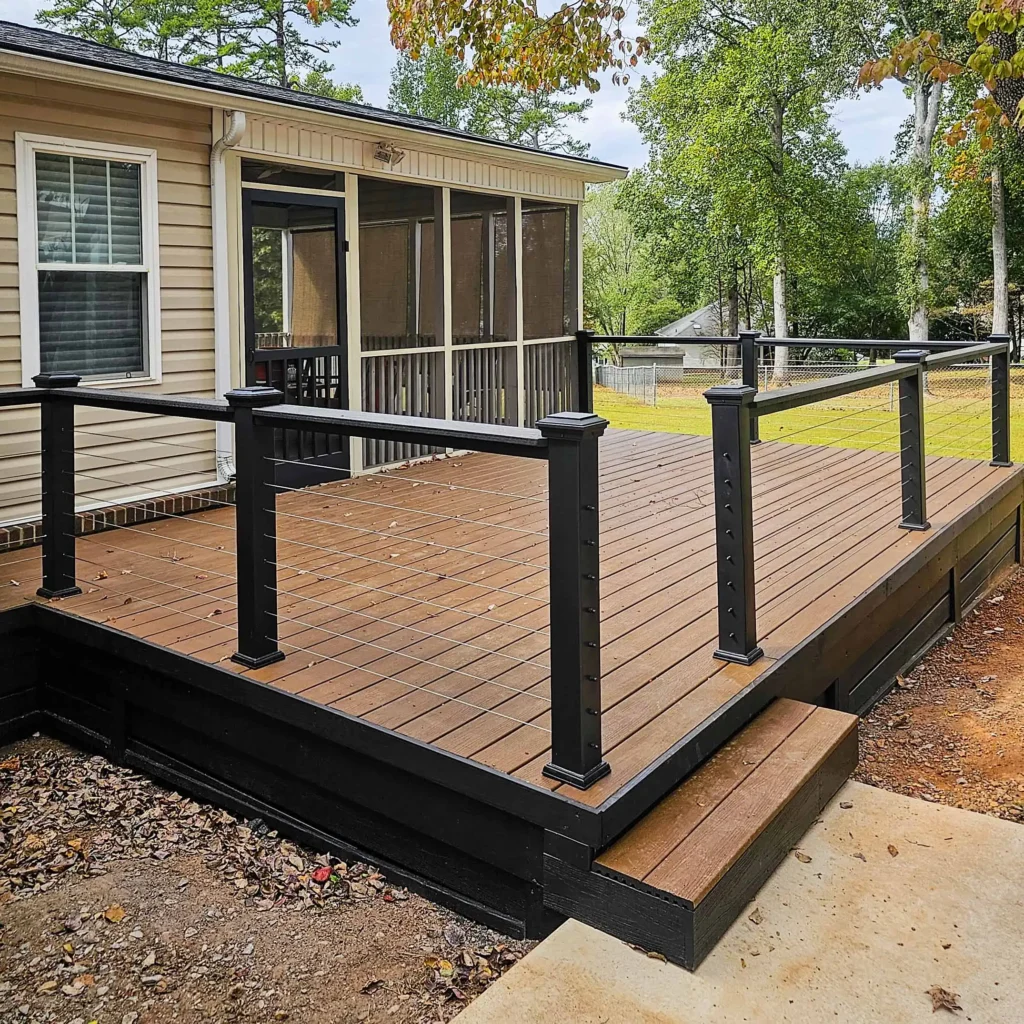 Photo: Brazawood.
An attached deck connects directly to your home. In real life, that usually means one thing: it feels like a natural extension of your indoor space.
If your dream is “open the back door and instantly be in the outdoor living area,” attached wins that feeling. It’s the smooth kitchen → deck → grill flow that makes weeknights easier and weekends more social.
Photo: Brazawood.
An attached deck connects directly to your home. In real life, that usually means one thing: it feels like a natural extension of your indoor space.
If your dream is “open the back door and instantly be in the outdoor living area,” attached wins that feeling. It’s the smooth kitchen → deck → grill flow that makes weeknights easier and weekends more social.
When attached tends to feel “right”
An attached layout is usually the best fit when:- You want the deck to function like an outdoor dining room (especially if you entertain).
- Your most-used door is a back door or sliding door, and you want zero fuss getting outside.
- You’re planning an elevated deck off a main level or second level (common on lots with a walk-out basement).
- You want a clean, built-in look that feels original to the home.
The tradeoff most homeowners don’t think about
Because an attached deck ties into the house structure, the details of that connection matter — a lot. A proper connection typically involves careful structural attachment and water management (the “keep water out of your house” part). The American Wood Council deck guide highlights the need for proper flashing at the house connection, and it’s very clear that you can’t treat the attachment like a casual DIY bolt-on. That doesn’t mean attached decks are risky — it just means they should be designed and built correctly. And yes, this is one reason many homeowners in the Charlotte area choose a professional custom decks builder instead of trying to piece it together themselves. Custom decks are one of those projects where the “invisible” details are what protect your investment long-term. If you’re curious what the process actually looks like (design, planning, build), you can peek at our process.Key Point 2: Why a detached deck can be the smarter move for tricky yards
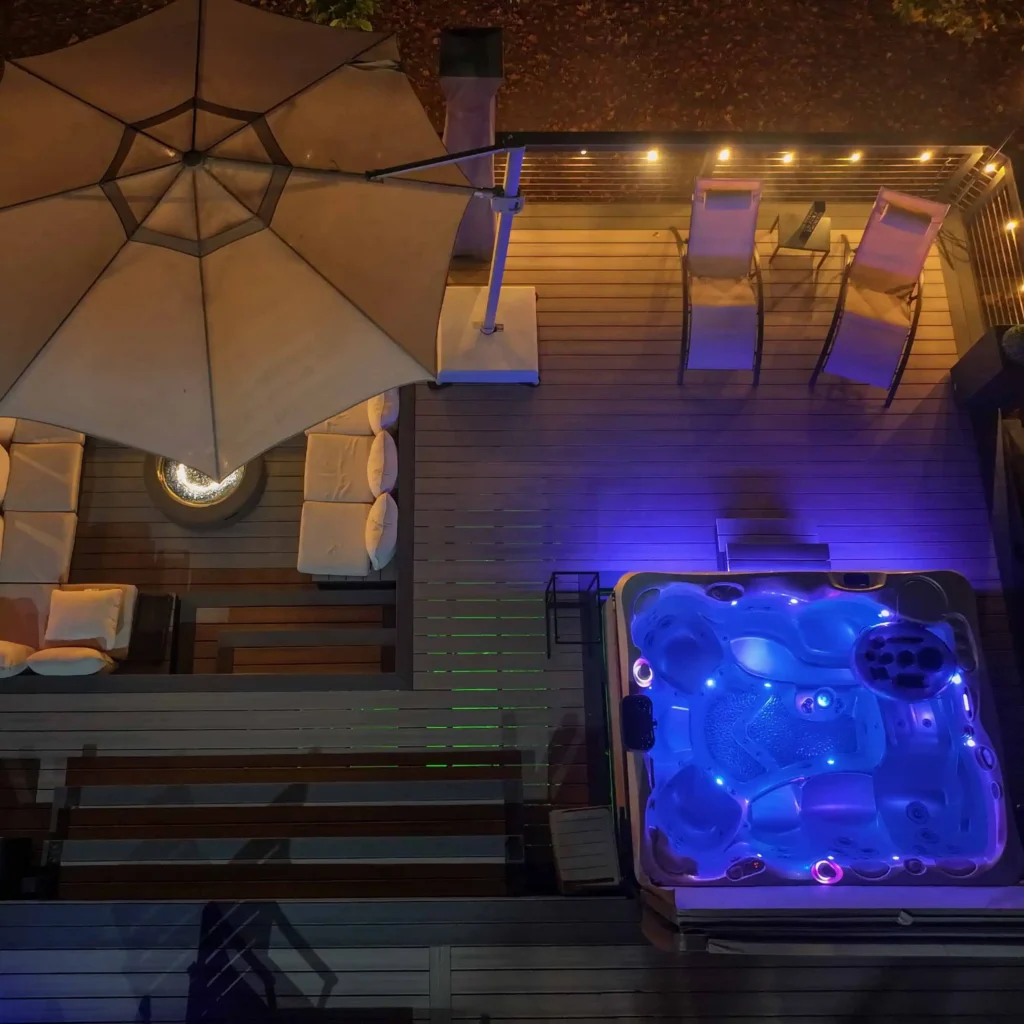 Photo: Brazawood.
A detached deck (freestanding) isn’t attached to the home. People also call certain versions a floating deck, even though it doesn’t literally float — it’s just independent from the house.
Detached decks shine when your yard (or your house exterior) makes an attached layout complicated, expensive, or just… not ideal.
Photo: Brazawood.
A detached deck (freestanding) isn’t attached to the home. People also call certain versions a floating deck, even though it doesn’t literally float — it’s just independent from the house.
Detached decks shine when your yard (or your house exterior) makes an attached layout complicated, expensive, or just… not ideal.
Where detached decks really shine
A detached option is often the best choice when:- Your yard has a slope and the “best spot” isn’t right next to the house.
- You’re working around drainage challenges and want flexibility in placement.
- You’d rather avoid touching the home’s exterior (especially on older homes or tricky cladding).
- You want a “destination” space — like a fire pit deck, a lounge zone, or a view-facing platform.
A detached deck can still feel connected (without being attached)
This is where design matters. A detached deck doesn’t have to feel like it’s “out there somewhere.” A few simple moves make it feel intentional:- A short walkway from the house
- Steps that land where you naturally walk
- Lighting (for example, IllumiDeck) that guides you from door to deck
- A layout that mirrors the home’s lines so it feels cohesive
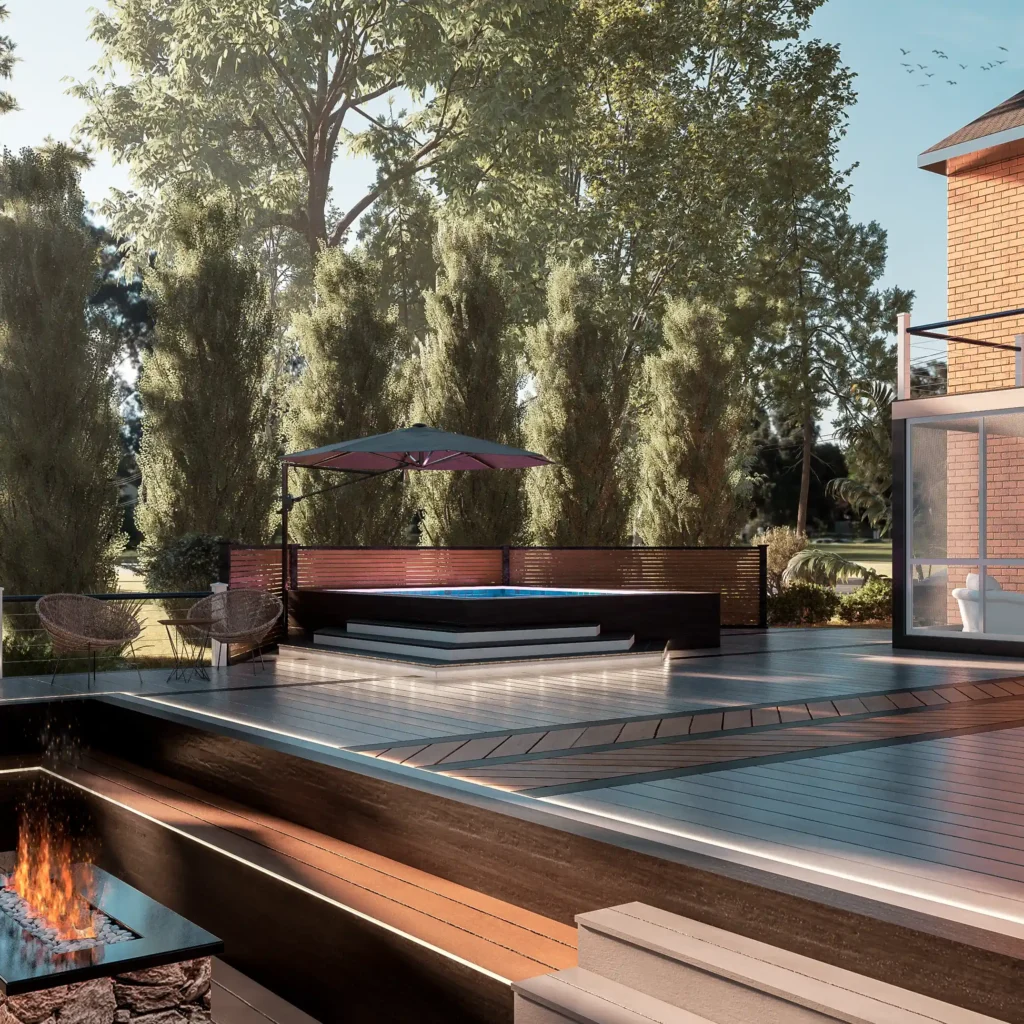 Image: Brazawood 3D Renderings.
If you want real examples of “destination decks,” the portfolio gallery is a great place to start.
Image: Brazawood 3D Renderings.
If you want real examples of “destination decks,” the portfolio gallery is a great place to start.
Key Point 3: Quick comparison table: attached deck vs detached deck in real-life terms
Here’s the simplest way to compare the two — not in theory, but in how they affect daily life, layout flexibility, and common lot issues.Key Point 4: Permits, code, and HOA approvals in Charlotte can affect the decision
Let’s talk about the part nobody wants to deal with, but everyone should understand: approvals. In Mecklenburg County, Mecklenburg County Code Enforcement is the authority that issues building-related permits, and they make it clear that permits are required for residential work tied to construction, alteration, repair, and related scope. Also, if you’re in the City of Charlotte, the City of Charlotte Residential Permit Guidelines note that decks (and similar outdoor structures like pergolas and roof covers over patios/decks) can trigger additional city review steps and “holds” that must be released during the permitting process. Helpful resource: LDIRL flowchart (PDF) and Individual Residential Lot Reviews.A simple “what this means for you” version
- Some projects are straightforward.
- Some projects trigger extra review depending on location, site factors, stormwater/tree considerations, and what exactly you’re building.
Don’t sleep on timing: permits can expire
This surprises people: permits aren’t “set it and forget it.” Mecklenburg County Code Enforcement states that if a permit is pulled and no inspections are ever requested/performed, it expires after six months; and if inspections start but aren’t completed, it can expire one year after the latest inspection. So even if you’re just “planning ahead,” it’s worth aligning design, permitting, and build timing so nothing stalls.What about deck safety basics?
Two common code-related items that show up in deck planning:- Guardrails: In North Carolina, guidance tied to Section R312.1.2 indicates a minimum 36-inch guard height above the walking surface, and spacing rules exist to prevent small children from slipping through (see the North Carolina Office of State Fire Marshal reference).
- Deck height and guards: The American Wood Council guide also notes guards are required for decks greater than 30″ above grade.
Key Point 5: Slopes, drainage, and small yards — how to pick the deck type that actually behaves well
 Photo: Brazawood (more slope-friendly builds in the portfolio gallery).
This is where the “right” choice becomes very personal.
Photo: Brazawood (more slope-friendly builds in the portfolio gallery).
This is where the “right” choice becomes very personal.
If your yard has a slope
Sloped yards are common around Charlotte and Lake Norman. And they create two very different deck conversations:- An attached elevated deck. This is great when you want a clean exit from the main living level and you’re okay with stairs down to the yard.
- A detached deck placed where the grade cooperates. This can be great when you’d rather keep the deck closer to ground level (less height, fewer stairs, often a different feel).
If you have drainage problems
If water collects near the house, you want to be extra thoughtful about any structure that connects to the home — not because it can’t be done, but because details matter. Detached decks give you more freedom to avoid the soggy zones. But they’re not “immune” to drainage issues either. A well-built deck still needs smart footings and a plan for how water moves through the yard. One thing that’s worth noting: the City of Charlotte’s residential guidance specifically calls out stormwater-related review holds in the permitting process for certain projects. In plain English: if your lot has stormwater constraints, it’s better to know early than discover it halfway through.If your yard is small
Smaller yards (or narrow side setbacks) often do better with attached decks because they maximize usable space where you already walk. But a detached deck can still work beautifully if it’s designed like a “room” — a defined lounge area with privacy screening, maybe a pergola overhead, and a short path connecting it. If you’re leaning toward shade or a cover, it can help to explore options like pergolas & sunrooms or porches as part of the overall plan.Key Point 6: Budget in Charlotte: upfront cost vs “cost to live with it”
This is the part most homeowners care about — and it’s also where people get stuck. Let’s simplify it into two ideas:- Upfront build cost (materials + labor + design complexity)
- Cost of ownership (maintenance, repairs, refinishing, time)
Typical price ranges (Charlotte context)
According to Angi, the average cost to build a deck in Charlotte ranges from about $20 to $50 per square foot, and labor can commonly range from roughly $12 to $28 per square foot. That range is wide because a lot changes the price:- height (ground-level vs second-story)
- stairs
- structural complexity for slopes
- railings (especially premium rail systems)
- and the material you choose
Materials: wood vs composite in “real life”
Angi also lists typical material cost ranges per square foot (materials only), such as pressure-treated wood at roughly $2–$4 and composite around $9–$17. Composite costs more upfront, but many homeowners in humid climates like Charlotte like it because the maintenance routine is simpler. Image: Trex.
For example:
Image: Trex.
For example:
- Trex emphasizes that its composite decking is “low maintenance” and doesn’t require sanding, painting, staining, or sealing.
- TimberTech describes composite as low maintenance and highlights limited warranties that can run 25–30 years for composite, with even longer coverage for certain PVC lines.
- Fiberon also positions capped decking as a “vs. wood” alternative with benefits like not splintering/cracking and claims of low annual maintenance costs (a manufacturer claim, but still useful context when comparing).
Cost snapshot table (simple, not perfect)
These ranges are not quotes — just a way to think clearly.“Will it add value?”
Value is tricky because it depends on your home, your neighborhood, and how well the deck fits the property. But it’s helpful to know decks can perform well in resale math. The Journal of Light Construction Cost vs Value (2024) report lists national averages showing a “Deck Addition | Wood” recouping about 83% and “Deck Addition | Composite” around 68% (national averages, not Charlotte-specific). I like to frame it this way: even if you never plan to sell, you still want the deck to feel like an “obvious yes” for the next buyer. A deck that fits the home and yard does that. Want to see what “fits the home” looks like across different styles and lot types? Check out the portfolio gallery.A quick way to decide (without overthinking it)
If you’re stuck, try answering these six questions honestly:- Do we want to step outside and instantly be on the deck? If yes, lean attached deck.
- Is the best part of our yard not near the house? If yes, lean detached deck.
- Are we dealing with a slope where stairs would be unavoidable? If stairs are fine, attached still works. If you want less height, detached is worth a look.
- Do we have drainage issues close to the house? Detached may give better placement flexibility.
- Is low maintenance a top priority? Consider composite decking (or premium composite/PVC).
- Do we need to “see it” before committing? Ask for 3D renderings so you’re choosing with confidence, not guesswork.
What about a rooftop deck in Charlotte?
Rooftop decks are a different category. They usually involve bigger structural questions, different waterproofing concerns, and more layered approvals. As a general reference, Angi notes that most rooftop decks require building and zoning permits and may also require HOA approval, and inspections are typically part of the process. If a rooftop deck is on your radar, the smartest first step is a feasibility conversation — structure + code + HOA + budget — before you fall in love with a design that isn’t realistic for the home.Conclusion
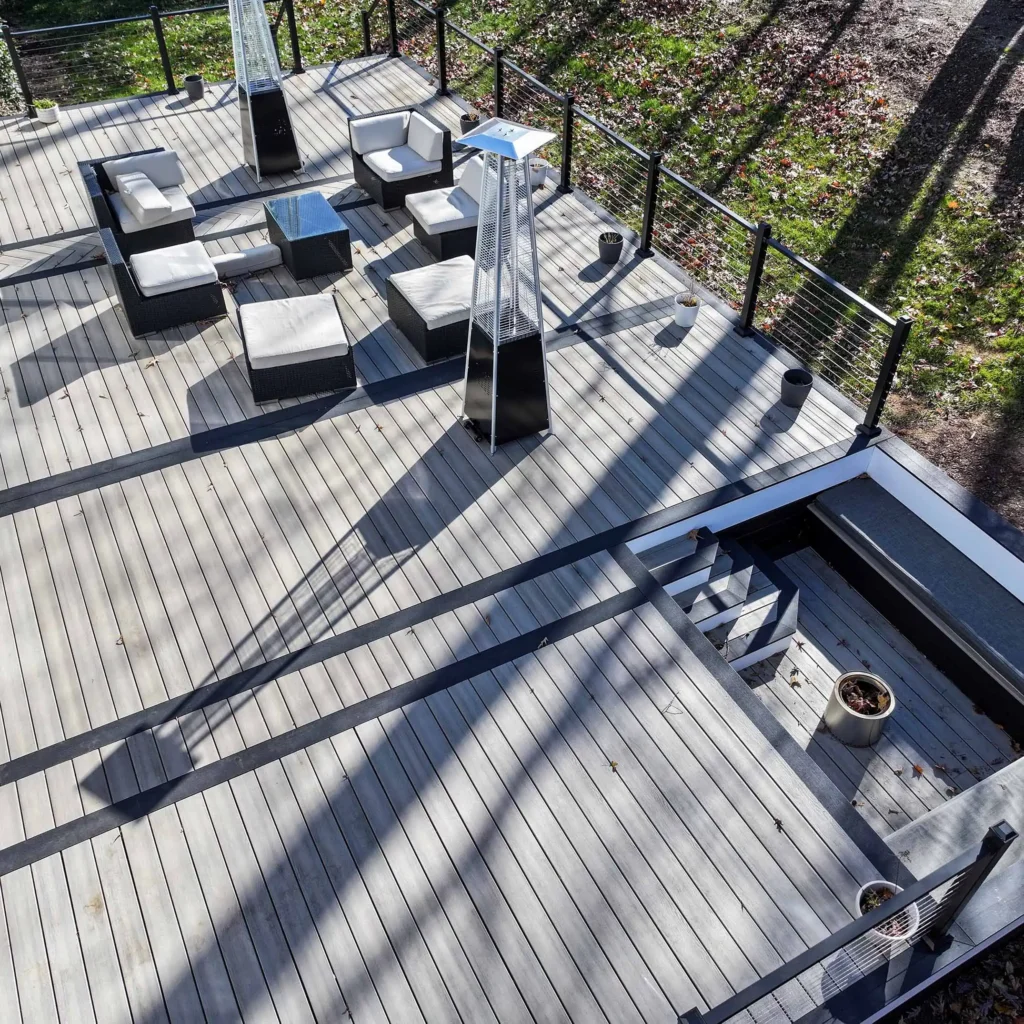 Photo: Brazawood.
Choosing between an attached vs detached deck isn’t about which one is “better.” It’s about which one fits how you live and how your lot behaves.
Attached decks usually win for seamless indoor-outdoor flow and that “it feels like part of the house” vibe.
Detached decks usually win when the yard has constraints (slope, drainage, placement limitations) and you want freedom to put the outdoor living space where it truly works.
Either way, the best outcome comes from making the decision with a clear plan — not just a Pinterest screenshot and a rough measurement.
If you want help narrowing it down for your home in Charlotte (or nearby areas like Huntersville, Lake Norman, Matthews, and Lake Wylie), a quick design consultation can save you weeks of second-guessing. And if you’d like, we can map both options, compare them side-by-side, and use 3D renderings to make the choice feel obvious — then guide you into a smooth build plan. If you’re ready, you can get a quote or reach out through contact.
Photo: Brazawood.
Choosing between an attached vs detached deck isn’t about which one is “better.” It’s about which one fits how you live and how your lot behaves.
Attached decks usually win for seamless indoor-outdoor flow and that “it feels like part of the house” vibe.
Detached decks usually win when the yard has constraints (slope, drainage, placement limitations) and you want freedom to put the outdoor living space where it truly works.
Either way, the best outcome comes from making the decision with a clear plan — not just a Pinterest screenshot and a rough measurement.
If you want help narrowing it down for your home in Charlotte (or nearby areas like Huntersville, Lake Norman, Matthews, and Lake Wylie), a quick design consultation can save you weeks of second-guessing. And if you’d like, we can map both options, compare them side-by-side, and use 3D renderings to make the choice feel obvious — then guide you into a smooth build plan. If you’re ready, you can get a quote or reach out through contact. FAQs

Photo: Brazawood.
1) Do I need a permit to build a deck in Charlotte or Mecklenburg County?
In most cases, deck projects fall under work that requires permits. Mecklenburg County Code Enforcement outlines that permits are required for residential work tied to construction, alteration, repair, and related scope.
Also, if you’re inside the City of Charlotte, certain residential-lot projects (including decks) can involve city review steps that relate to zoning/stormwater/trees. If you want a “big picture” view, the LDIRL flowchart is a helpful starting point.
2) If my deck is “floating,” does that mean I can skip approvals?
Not automatically. “Floating” usually just means it’s not attached to the house. It can still be a significant structure, and approvals depend on scope, height, location, and local rules. When in doubt, check early — it’s a lot easier than revising plans later.
3) Which deck type is better for a sloped yard?
It depends on where you want to spend time. If you want the deck right off your main living level, an attached deck with stairs may be the best fit. If you want the deck where the grade is calmer (or where the view is better), a detached deck often gives more flexibility.
4) What are the basic safety rules I should know before I design anything?
Two common ones:
- Guardrails are typically required at elevated edges, and North Carolina guidance tied to Section R312.1.2 notes a minimum 36-inch guard height and spacing rules (see the North Carolina Office of State Fire Marshal reference).
- The American Wood Council deck guide also notes guards are required for decks greater than 30" above grade.
A pro designer/builder will bake these into the plan so you’re not redesigning later.
5) Is composite decking worth it in Charlotte?
Many homeowners feel it is, mainly because Charlotte’s climate pushes people toward low-maintenance choices. Trex highlights that composite can avoid sanding/painting/staining/sealing, which is appealing if you’re busy.
If you’re okay with ongoing maintenance to save upfront, wood can still make sense — it’s about priorities.
6) How much does a deck cost in Charlotte, realistically?
A helpful baseline from Angi is roughly $20–$50 per square foot for deck builds in Charlotte, with labor commonly ranging about $12–$28 per square foot.
Your actual price depends on height, stairs, rails, material, and how complex the lot is (slope and drainage matter).
7) Can permits expire if I pull one and wait?
Yes. Mecklenburg County Code Enforcement notes permits can expire if no inspections occur within six months, and can also expire if work starts but stalls for too long.
That’s why aligning design + permitting + build schedule is important.
8) Is a rooftop deck possible here?
Sometimes, but it’s not a “standard deck” conversation. Rooftop decks often require multiple permits and may involve HOA approvals. Angi notes that permits and inspections are commonly required for rooftop decks.
Treat it like a feasibility project first, then design it once you know it’s viable. If you need help with the city review side of things, this LDIRL Applicant Guide (PDF) can clarify how the filing process works.
Introduction
If you’re already set on building a deck, you’re in a good place. The hard part now isn’t “Should we do it?” it’s choosing a layout that makes sense for your lot, your lifestyle, and what you want to invest. And in Charlotte (and nearby spots like Lake Norman, Huntersville, Matthews, Lake Wylie, and SouthPark), that decision gets real fast because so many yards have some kind of “thing”: a slope, a drainage issue, a walk-out basement, a big tree you love, or an HOA that wants approvals before you even pick a board color. So let’s make it simple. In this guide, you’ll learn how to compare an attached deck vs a detached deck (also called a freestanding deck or floating deck) using practical, everyday factors: how you actually live, how your yard behaves after rain, what tends to impact permits, and what the budget looks like over time. By the end, you’ll be able to say: “This is the deck type that fits our house,” and feel good scheduling a design consult instead of spinning in circles. If you’re also exploring outdoor living services and want inspiration before you decide, take a quick scroll through the portfolio gallery and notice how different the “right deck” looks from home to home.Key Point 1: What an attached deck does best (and when it’s the obvious choice)
Photo: Brazawood.
An attached deck connects directly to your home. In real life, that usually means one thing: it feels like a natural extension of your indoor space.
If your dream is “open the back door and instantly be in the outdoor living area,” attached wins that feeling. It’s the smooth kitchen → deck → grill flow that makes weeknights easier and weekends more social.
When attached tends to feel “right”
An attached layout is usually the best fit when:- You want the deck to function like an outdoor dining room (especially if you entertain).
- Your most-used door is a back door or sliding door, and you want zero fuss getting outside.
- You’re planning an elevated deck off a main level or second level (common on lots with a walk-out basement).
- You want a clean, built-in look that feels original to the home.
The tradeoff most homeowners don’t think about
Because an attached deck ties into the house structure, the details of that connection matter — a lot. A proper connection typically involves careful structural attachment and water management (the “keep water out of your house” part). The American Wood Council deck guide highlights the need for proper flashing at the house connection, and it’s very clear that you can’t treat the attachment like a casual DIY bolt-on. That doesn’t mean attached decks are risky — it just means they should be designed and built correctly. And yes, this is one reason many homeowners in the Charlotte area choose a professional custom decks builder instead of trying to piece it together themselves. Custom decks are one of those projects where the “invisible” details are what protect your investment long-term. If you’re curious what the process actually looks like (design, planning, build), you can peek at our process.Key Point 2: Why a detached deck can be the smarter move for tricky yards
Photo: Brazawood.
A detached deck (freestanding) isn’t attached to the home. People also call certain versions a floating deck, even though it doesn’t literally float — it’s just independent from the house.
Detached decks shine when your yard (or your house exterior) makes an attached layout complicated, expensive, or just… not ideal.
Where detached decks really shine
A detached option is often the best choice when:- Your yard has a slope and the “best spot” isn’t right next to the house.
- You’re working around drainage challenges and want flexibility in placement.
- You’d rather avoid touching the home’s exterior (especially on older homes or tricky cladding).
- You want a “destination” space — like a fire pit deck, a lounge zone, or a view-facing platform.
A detached deck can still feel connected (without being attached)
This is where design matters. A detached deck doesn’t have to feel like it’s “out there somewhere.” A few simple moves make it feel intentional:- A short walkway from the house
- Steps that land where you naturally walk
- Lighting (for example, IllumiDeck) that guides you from door to deck
- A layout that mirrors the home’s lines so it feels cohesive
Image: Brazawood 3D Renderings.
If you want real examples of “destination decks,” the portfolio gallery is a great place to start.
Key Point 3: Quick comparison table: attached deck vs detached deck in real-life terms
Here’s the simplest way to compare the two — not in theory, but in how they affect daily life, layout flexibility, and common lot issues.Key Point 4: Permits, code, and HOA approvals in Charlotte can affect the decision
Let’s talk about the part nobody wants to deal with, but everyone should understand: approvals. In Mecklenburg County, Mecklenburg County Code Enforcement is the authority that issues building-related permits, and they make it clear that permits are required for residential work tied to construction, alteration, repair, and related scope. Also, if you’re in the City of Charlotte, the City of Charlotte Residential Permit Guidelines note that decks (and similar outdoor structures like pergolas and roof covers over patios/decks) can trigger additional city review steps and “holds” that must be released during the permitting process. Helpful resource: LDIRL flowchart (PDF) and Individual Residential Lot Reviews.A simple “what this means for you” version
- Some projects are straightforward.
- Some projects trigger extra review depending on location, site factors, stormwater/tree considerations, and what exactly you’re building.
Don’t sleep on timing: permits can expire
This surprises people: permits aren’t “set it and forget it.” Mecklenburg County Code Enforcement states that if a permit is pulled and no inspections are ever requested/performed, it expires after six months; and if inspections start but aren’t completed, it can expire one year after the latest inspection. So even if you’re just “planning ahead,” it’s worth aligning design, permitting, and build timing so nothing stalls.What about deck safety basics?
Two common code-related items that show up in deck planning:- Guardrails: In North Carolina, guidance tied to Section R312.1.2 indicates a minimum 36-inch guard height above the walking surface, and spacing rules exist to prevent small children from slipping through (see the North Carolina Office of State Fire Marshal reference).
- Deck height and guards: The American Wood Council guide also notes guards are required for decks greater than 30″ above grade.
Key Point 5: Slopes, drainage, and small yards — how to pick the deck type that actually behaves well
Photo: Brazawood (more slope-friendly builds in the portfolio gallery).
This is where the “right” choice becomes very personal.
If your yard has a slope
Sloped yards are common around Charlotte and Lake Norman. And they create two very different deck conversations:- An attached elevated deck. This is great when you want a clean exit from the main living level and you’re okay with stairs down to the yard.
- A detached deck placed where the grade cooperates. This can be great when you’d rather keep the deck closer to ground level (less height, fewer stairs, often a different feel).
If you have drainage problems
If water collects near the house, you want to be extra thoughtful about any structure that connects to the home — not because it can’t be done, but because details matter. Detached decks give you more freedom to avoid the soggy zones. But they’re not “immune” to drainage issues either. A well-built deck still needs smart footings and a plan for how water moves through the yard. One thing that’s worth noting: the City of Charlotte’s residential guidance specifically calls out stormwater-related review holds in the permitting process for certain projects. In plain English: if your lot has stormwater constraints, it’s better to know early than discover it halfway through.If your yard is small
Smaller yards (or narrow side setbacks) often do better with attached decks because they maximize usable space where you already walk. But a detached deck can still work beautifully if it’s designed like a “room” — a defined lounge area with privacy screening, maybe a pergola overhead, and a short path connecting it. If you’re leaning toward shade or a cover, it can help to explore options like pergolas & sunrooms or porches as part of the overall plan.Key Point 6: Budget in Charlotte: upfront cost vs “cost to live with it”
This is the part most homeowners care about — and it’s also where people get stuck. Let’s simplify it into two ideas:- Upfront build cost (materials + labor + design complexity)
- Cost of ownership (maintenance, repairs, refinishing, time)
Typical price ranges (Charlotte context)
According to Angi, the average cost to build a deck in Charlotte ranges from about $20 to $50 per square foot, and labor can commonly range from roughly $12 to $28 per square foot. That range is wide because a lot changes the price:- height (ground-level vs second-story)
- stairs
- structural complexity for slopes
- railings (especially premium rail systems)
- and the material you choose
Materials: wood vs composite in “real life”
Angi also lists typical material cost ranges per square foot (materials only), such as pressure-treated wood at roughly $2–$4 and composite around $9–$17. Composite costs more upfront, but many homeowners in humid climates like Charlotte like it because the maintenance routine is simpler.
Image: Trex.
For example:
- Trex emphasizes that its composite decking is “low maintenance” and doesn’t require sanding, painting, staining, or sealing.
- TimberTech describes composite as low maintenance and highlights limited warranties that can run 25–30 years for composite, with even longer coverage for certain PVC lines.
- Fiberon also positions capped decking as a “vs. wood” alternative with benefits like not splintering/cracking and claims of low annual maintenance costs (a manufacturer claim, but still useful context when comparing).
Cost snapshot table (simple, not perfect)
These ranges are not quotes — just a way to think clearly.“Will it add value?”
Value is tricky because it depends on your home, your neighborhood, and how well the deck fits the property. But it’s helpful to know decks can perform well in resale math. The Journal of Light Construction Cost vs Value (2024) report lists national averages showing a “Deck Addition | Wood” recouping about 83% and “Deck Addition | Composite” around 68% (national averages, not Charlotte-specific). I like to frame it this way: even if you never plan to sell, you still want the deck to feel like an “obvious yes” for the next buyer. A deck that fits the home and yard does that. Want to see what “fits the home” looks like across different styles and lot types? Check out the portfolio gallery.A quick way to decide (without overthinking it)
If you’re stuck, try answering these six questions honestly:- Do we want to step outside and instantly be on the deck? If yes, lean attached deck.
- Is the best part of our yard not near the house? If yes, lean detached deck.
- Are we dealing with a slope where stairs would be unavoidable? If stairs are fine, attached still works. If you want less height, detached is worth a look.
- Do we have drainage issues close to the house? Detached may give better placement flexibility.
- Is low maintenance a top priority? Consider composite decking (or premium composite/PVC).
- Do we need to “see it” before committing? Ask for 3D renderings so you’re choosing with confidence, not guesswork.
What about a rooftop deck in Charlotte?
Rooftop decks are a different category. They usually involve bigger structural questions, different waterproofing concerns, and more layered approvals. As a general reference, Angi notes that most rooftop decks require building and zoning permits and may also require HOA approval, and inspections are typically part of the process. If a rooftop deck is on your radar, the smartest first step is a feasibility conversation — structure + code + HOA + budget — before you fall in love with a design that isn’t realistic for the home.Conclusion
Photo: Brazawood.
Choosing between an attached vs detached deck isn’t about which one is “better.” It’s about which one fits how you live and how your lot behaves.
Attached decks usually win for seamless indoor-outdoor flow and that “it feels like part of the house” vibe.
Detached decks usually win when the yard has constraints (slope, drainage, placement limitations) and you want freedom to put the outdoor living space where it truly works.
Either way, the best outcome comes from making the decision with a clear plan — not just a Pinterest screenshot and a rough measurement.
If you want help narrowing it down for your home in Charlotte (or nearby areas like Huntersville, Lake Norman, Matthews, and Lake Wylie), a quick design consultation can save you weeks of second-guessing. And if you’d like, we can map both options, compare them side-by-side, and use 3D renderings to make the choice feel obvious — then guide you into a smooth build plan. If you’re ready, you can get a quote or reach out through contact. FAQs
Photo: Brazawood.
1) Do I need a permit to build a deck in Charlotte or Mecklenburg County?
In most cases, deck projects fall under work that requires permits. Mecklenburg County Code Enforcement outlines that permits are required for residential work tied to construction, alteration, repair, and related scope.
Also, if you’re inside the City of Charlotte, certain residential-lot projects (including decks) can involve city review steps that relate to zoning/stormwater/trees. If you want a “big picture” view, the LDIRL flowchart is a helpful starting point.
2) If my deck is “floating,” does that mean I can skip approvals?
Not automatically. “Floating” usually just means it’s not attached to the house. It can still be a significant structure, and approvals depend on scope, height, location, and local rules. When in doubt, check early — it’s a lot easier than revising plans later.
3) Which deck type is better for a sloped yard?
It depends on where you want to spend time. If you want the deck right off your main living level, an attached deck with stairs may be the best fit. If you want the deck where the grade is calmer (or where the view is better), a detached deck often gives more flexibility.
4) What are the basic safety rules I should know before I design anything?
Two common ones:
- Guardrails are typically required at elevated edges, and North Carolina guidance tied to Section R312.1.2 notes a minimum 36-inch guard height and spacing rules (see the North Carolina Office of State Fire Marshal reference).
- The American Wood Council deck guide also notes guards are required for decks greater than 30" above grade.
A pro designer/builder will bake these into the plan so you’re not redesigning later.
5) Is composite decking worth it in Charlotte?
Many homeowners feel it is, mainly because Charlotte’s climate pushes people toward low-maintenance choices. Trex highlights that composite can avoid sanding/painting/staining/sealing, which is appealing if you’re busy.
If you’re okay with ongoing maintenance to save upfront, wood can still make sense — it’s about priorities.
6) How much does a deck cost in Charlotte, realistically?
A helpful baseline from Angi is roughly $20–$50 per square foot for deck builds in Charlotte, with labor commonly ranging about $12–$28 per square foot.
Your actual price depends on height, stairs, rails, material, and how complex the lot is (slope and drainage matter).
7) Can permits expire if I pull one and wait?
Yes. Mecklenburg County Code Enforcement notes permits can expire if no inspections occur within six months, and can also expire if work starts but stalls for too long.
That’s why aligning design + permitting + build schedule is important.
8) Is a rooftop deck possible here?
Sometimes, but it’s not a “standard deck” conversation. Rooftop decks often require multiple permits and may involve HOA approvals. Angi notes that permits and inspections are commonly required for rooftop decks.
Treat it like a feasibility project first, then design it once you know it’s viable. If you need help with the city review side of things, this LDIRL Applicant Guide (PDF) can clarify how the filing process works.
Related Articles

Deck Builder Near Me in Charlotte
When you Google “deck builder near me” in Charlotte, you’ll see a long list. Here’s the truth: most decks fail on framing, flashing, and drainage—not the pretty boards. If you…
Read More
Maximizing Small Backyards: Smart Design Tips for Outdoor Living
Not every home comes with a sprawling backyard, but limited space doesn’t have to mean limited possibilities. A small outdoor area can still feel spacious, functional, and inviting with the…
Read More
The Best Outdoor Lighting Ideas for Fall & Winter Gatherings
As the days grow shorter, outdoor lighting becomes essential for extending the use of your deck, patio, or porch. The right lighting not only keeps your space functional after sunset…
Read More