
Learn how biophilic deck design and simple wellness zones can turn a North Carolina backyard into a calm retreat this season, with practical ideas for layout, plants, shade, and lighting you can actually use.
If you own a mid to high-end home around Charlotte and Lake Norman, you have probably noticed a shift in outdoor living. Decks are not just “a place for the grill” anymore. They are becoming wellness spaces: a quiet coffee corner, a small stretch and breathe spot, a lounge area that feels like a boutique resort.
This is a pillar guide, so we will go deep but keep it simple. You will learn what biophilic deck design really means, how wellness zones work, and how to bring it all together with smart materials, plants, and lighting. And if you want to see how these ideas look in real projects, you can always browse our Portfolio. You can also explore our outdoor living services to see what we build most often.
Key points
What biophilic deck design really means in plain English
“Biophilic” sounds fancy, but the idea is pretty natural: people feel better when they are connected to nature. In design terms, it means shaping a space so it supports that connection, even when you are still at home, still busy, still living your regular life.
Organizations like the Global Wellness Institute point to biophilic design as a wellness concept that uses nature and natural patterns to support health. And the well-known framework from Terrapin Bright Green explains practical “patterns” designers use, like natural light, views of greenery, and materials that feel warm and organic.
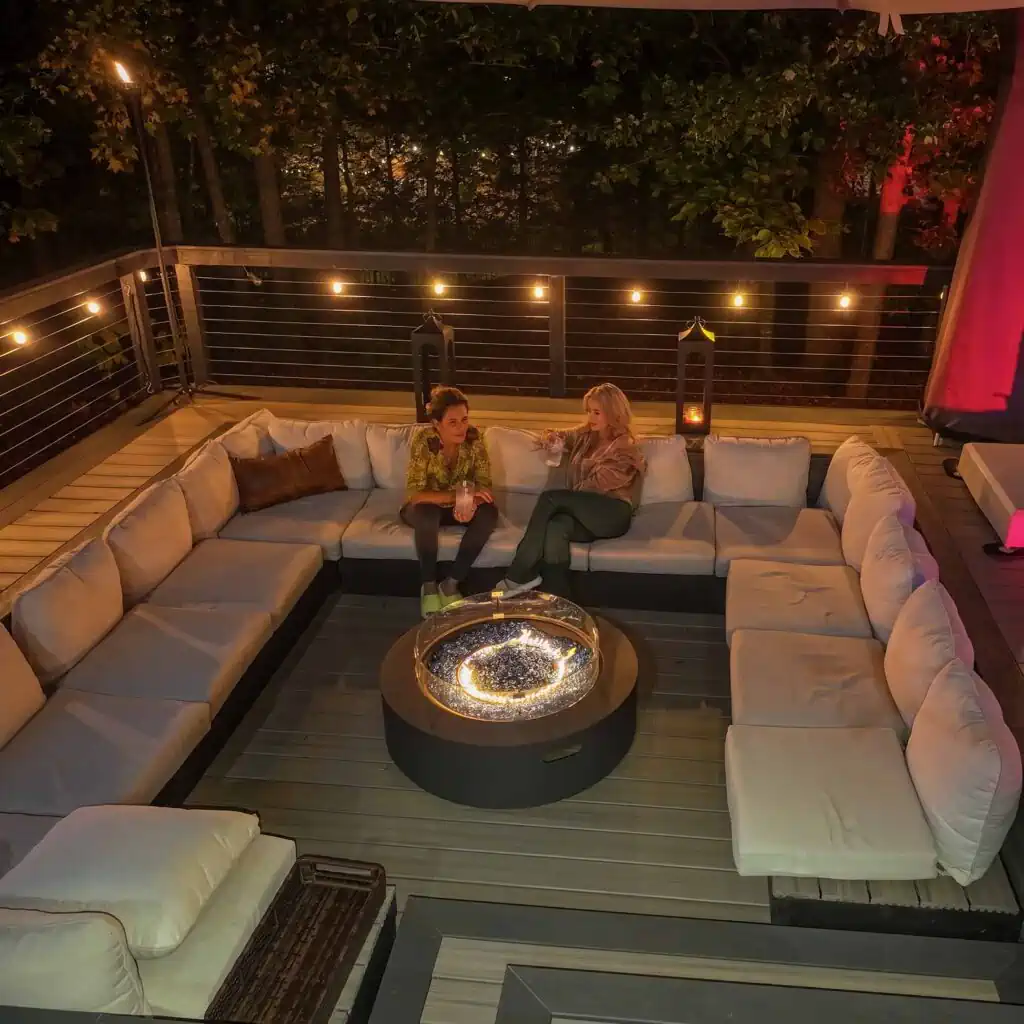
For a deck in North Carolina, biophilic design usually comes down to a few things you can actually see and feel:
- Visual connection to nature, like framing trees, adding a border of plants, or keeping railings open so your eyes reach the landscape.
- Natural materials and textures, such as wood tones, stone, matte metals, and fabrics that do not feel “plastic” or shiny.
- Comfortable microclimates, meaning the space is usable when the sun is intense, when mosquitoes are out, or when evenings cool down.
And here is the big mindset shift: your deck is not the “product.” The feeling is. A well-planned custom deck is just the platform that helps the feeling happen, day after day.
Why wellness zones are showing up across North Carolina
In our neck of the woods, people are busy. Work is intense. Schedules are full. So the outdoor space has to do more than look pretty. It needs to support how you actually recover and recharge.
There is also real research behind the trend. The World Health Organization has published evidence reviews connecting urban green spaces with health benefits and stress-related pathways. Systematic reviews in sources like NIH PubMed Central also discuss how green space type and quality can relate to health outcomes.
But you do not need a journal to feel it. You can test it on a normal Tuesday: step outside, sit in the shade, and listen to birds for five minutes. Your body gets the message.
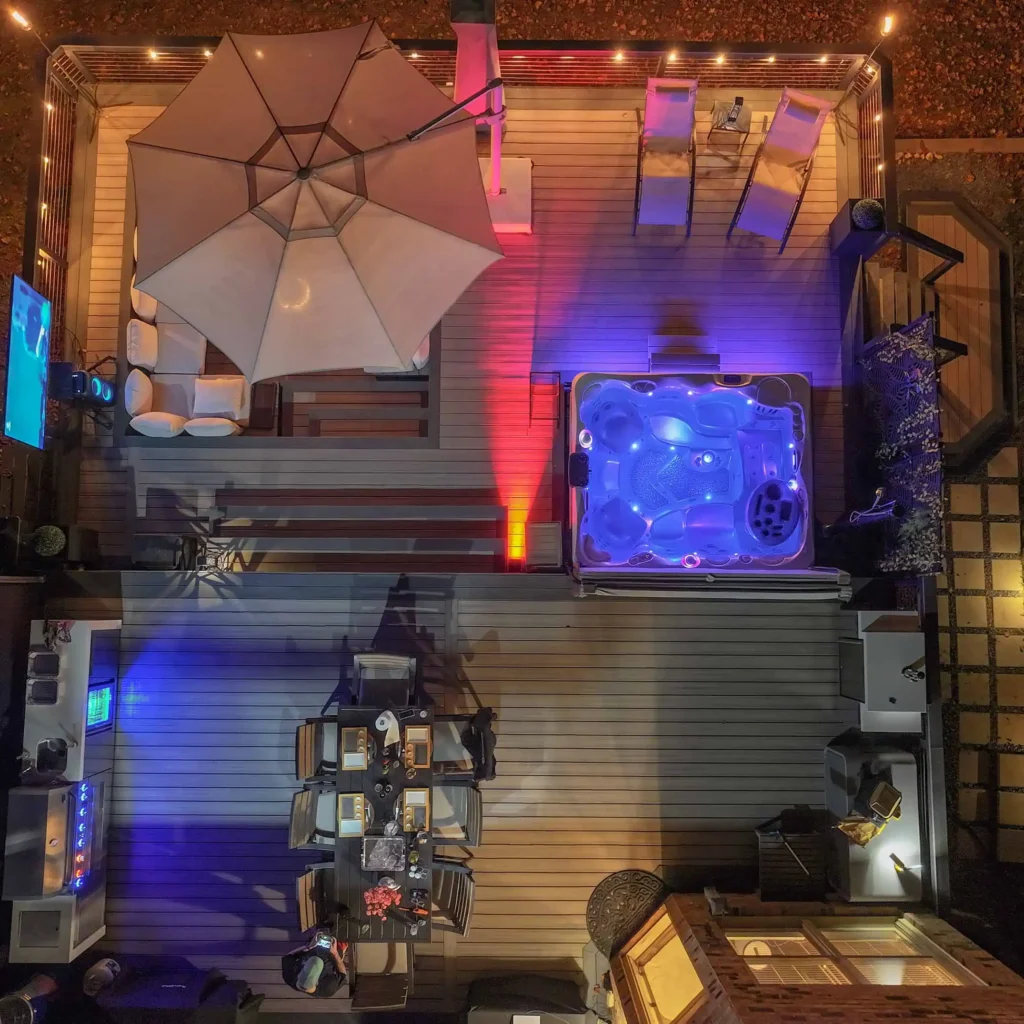
That is why homeowners in places like Charlotte, NC and Huntersville, NC are asking for decks that include “zones” for different moods: social time, solo time, movement, and calm.
The simplest way to create wellness zones on a deck
If you take one thing from this article, let it be this: wellness zones are not about buying “wellness furniture.” They are about designing for behaviors.
Start with three quick questions:
- When will I actually use this space? Morning coffee, family dinners, late-night quiet time, or all three?
- Do I want privacy, or do I want openness and views?
- What is my one non-negotiable feature? A fire pit, a hot tub, a dining table, or a shaded lounge?
Once you answer those, you can lay out zones like you would inside a home. A dining zone needs a clear path and enough elbow room. A lounge zone needs softer light and a little separation. A stretch zone needs open floor space, not clutter.
Here is a simple “menu” of deck wellness zones you can mix and match.
Want to feel confident before construction starts? That is where 3D renderings help a lot. You can see where the sun hits, how wide the walkways feel, and how the zones flow, before anything is built.

Biophilic borders: the trend that makes a deck feel grounded
One of the easiest ways to make a deck feel “biophilic” is to stop treating it like a floating stage. Instead, you visually connect it to the yard with what we call biophilic borders.
This can be as simple as a line of planters, a built-in bench with greenery behind it, or layered landscaping that softens the hard edges of the deck. It is not about turning your deck into a garden. It is about giving your eyes somewhere natural to rest.
If you want low-maintenance plants that still feel lush, start with regional resources like the NC State Extension native plant resources and the NC State Plant Toolbox. It helps you pick “the right plant for the right place,” which is exactly what you want when you are designing an outdoor space for real life.
Materials that look great and keep life simple
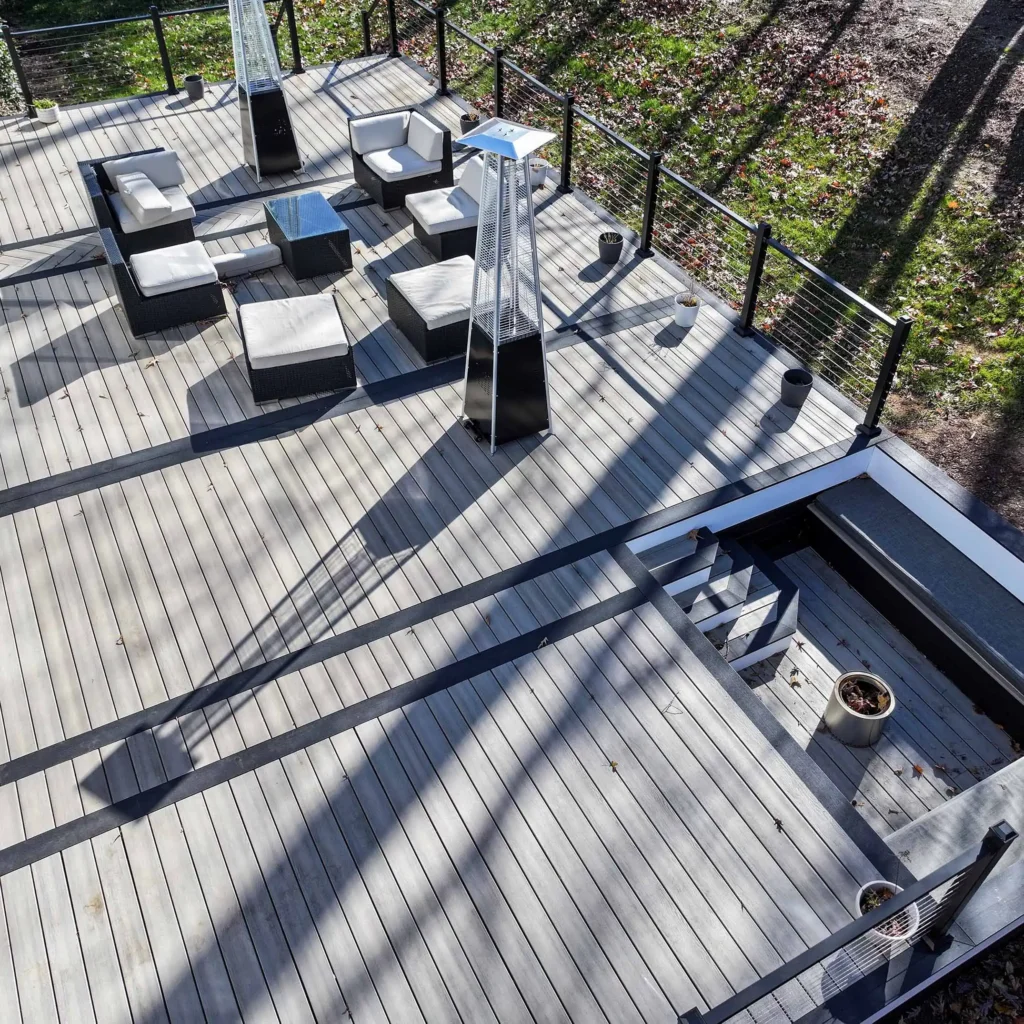
Wellness is also maintenance. If the deck is constantly splintering, staining, or stressing you out, it is not exactly a “retreat.” That is why many homeowners choose composite options for a premium outdoor space.
Here is a simple comparison that homeowners ask about all the time.
We often work with trusted materials like Trex, Fiberon, and Veranda, and we can also source options like NewTechWood depending on the look and performance you want. Many homeowners also like buying or comparing boards at Home Depot to get a feel for color and texture in person.
If you are not sure what fits your home best, it helps to look at real installations. Our Gallery is a good place to compare color tones, railing styles, and layout ideas without guessing.
Shade, ventilation, and bug control for year-round comfort
In North Carolina, comfort changes by the hour. The sun can be intense, summer storms come fast, and bugs love a good evening. So shade and airflow are not “extras.” They are part of wellness design.
Depending on your home and yard, you might solve this with:
- A pergola or sunroom to filter light and create a cooler lounge zone.
- A porch, especially if you want screened comfort for dining and relaxing.
- Smart layout choices, like placing a quiet seating area where you naturally get breeze.

Lighting that feels calm, not harsh
Lighting is where a lot of “almost perfect” outdoor spaces go wrong. Too bright, too blue, too much glare, and suddenly the deck feels like a parking lot.
A simple guideline is to follow the DarkSky principles: lighting should be useful, targeted, low-level, controlled, and warm-colored. That is exactly the vibe you want for a wellness zone.
Practical lighting that supports biophilic outdoor living usually looks like:
- Soft step lighting for safety without glare.
- Under-rail or under-cap lighting to outline the space gently.
- Small, warm accents near plants, textures, or an outdoor feature.
If you like the idea of lighting built into the deck itself, explore LumiDeck Products for integrated solutions that keep things clean and intentional.

One anchor element that makes the deck feel like a retreat
When a deck feels like a resort, it usually has one anchor element that tells your brain: “This is the place.”
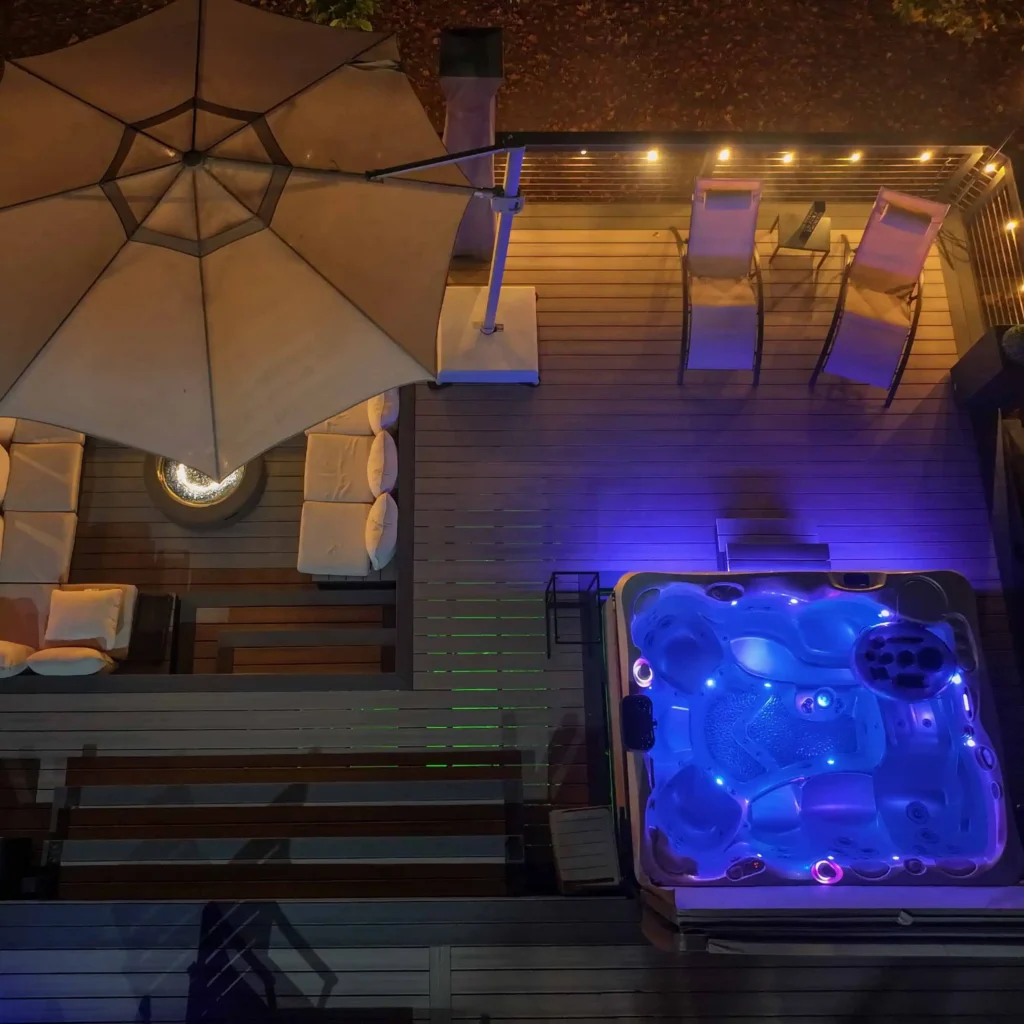
For some families, it is a fire feature. For others, it is water, like a hot tub. It can also be something quieter, like a built-in daybed under shade, or a dining table positioned to catch sunset light.
These features often pair well with hardscape elements like pavers or a small patio extension, especially when you want to create a separate lounge “room” off the main deck. If you are thinking about fire pits, concrete work, or expanded outdoor structures, our home additions services cover those upgrades too.
A simple planning checklist before you build
Before you buy furniture or choose colors, walk outside and do a quick “reality check” on your yard. It sounds obvious, but it saves so many headaches.
- Track sun and shade for a few days. Where is it too hot at 4 pm? Where is it perfect in the morning?
- Notice the breeze. Even a small wind corridor can make a summer lounge zone feel cooler.
- Listen for noise. If the street is loud, a privacy wall, planting border, or pergola placement can change the feeling.
- Think about flow. How do people move from the kitchen to the deck? Where do they naturally gather?
- Decide your zones before you decide your furniture.
If you want to see the plan before committing, this is exactly where 3D renderings are worth it. And if you are curious how we take a concept from idea to build, you can read about our process and learn more about who we are.

Conclusion
Biophilic deck design is not a strict style. It is a smarter way to plan outdoor living so it supports your wellbeing. When you combine natural textures, greenery, shade, and warm lighting, your deck stops being an “extra” space and starts feeling like a real part of your life.
And the best part is that you do not need a massive backyard to do it. A few intentional wellness zones can make a big difference, whether you live in Charlotte, Huntersville, Lake Norman, Concord, Cornelius, Davidson, Mint Hill, Matthews, Ballantyne, Weddington, Marvin, Denver, Mooresville, Gastonia, Lake Wylie, Fort Mill, Tega Cay, or Shelby.
If you want inspiration first, take a look at our Gallery and browse the blog for more outdoor living ideas, including trends like multi-level decks and integrated lighting that show up in sources like Better Homes & Gardens.
And if you are ready to talk about a custom layout for your home, you can request a quote through Get a Quote or reach out directly on our Contact page. If you are still in the planning and pricing stage, our Deck in a Pack page is a helpful starting point too. No pressure. Just a clear next step.
Frequently asked questions
Related Articles

What’s the Best Time to Start Planning a Deck Project in Charlotte, NC?
If you’ve been dreaming about adding a deck to your home, you’ve probably asked yourself: When’s the best time to get started? The short answer is: sooner than you think!…
Read More
Brazawood: Outdoor Spaces by Deck Company Charlotte NC
Homeowners in Charlotte have been transforming their backyards into relaxing outdoor retreats, creating spaces perfect for entertaining, unwinding, and enjoying nature. A well-designed deck is often the centerpiece of these…
Read More
Boost Outdoor Living: Deck Renovation Charlotte Tips
Outdoor living spaces are becoming some of the most coveted features of homes in Charlotte, North Carolina. With a recent surge in homeowners seeking to create their retreats, the demand…
Read More