Composite decking

Top Custom Deck Design Trends in Charlotte, NC: Modern Layouts, Mixed Materials, and Built-In Lighting

By Brazawood - March 7, 2026

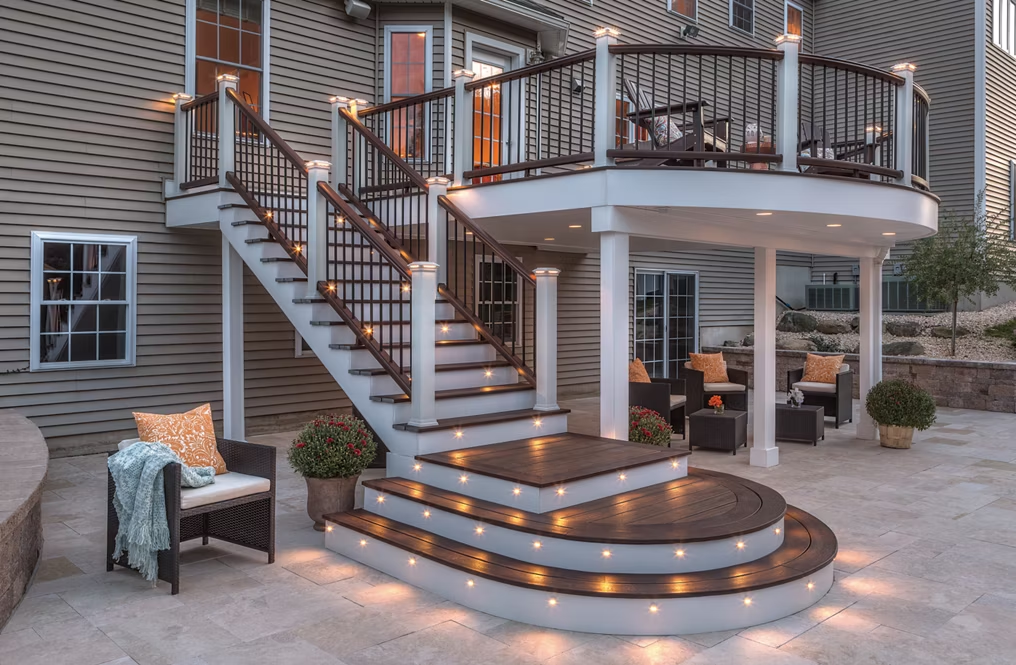
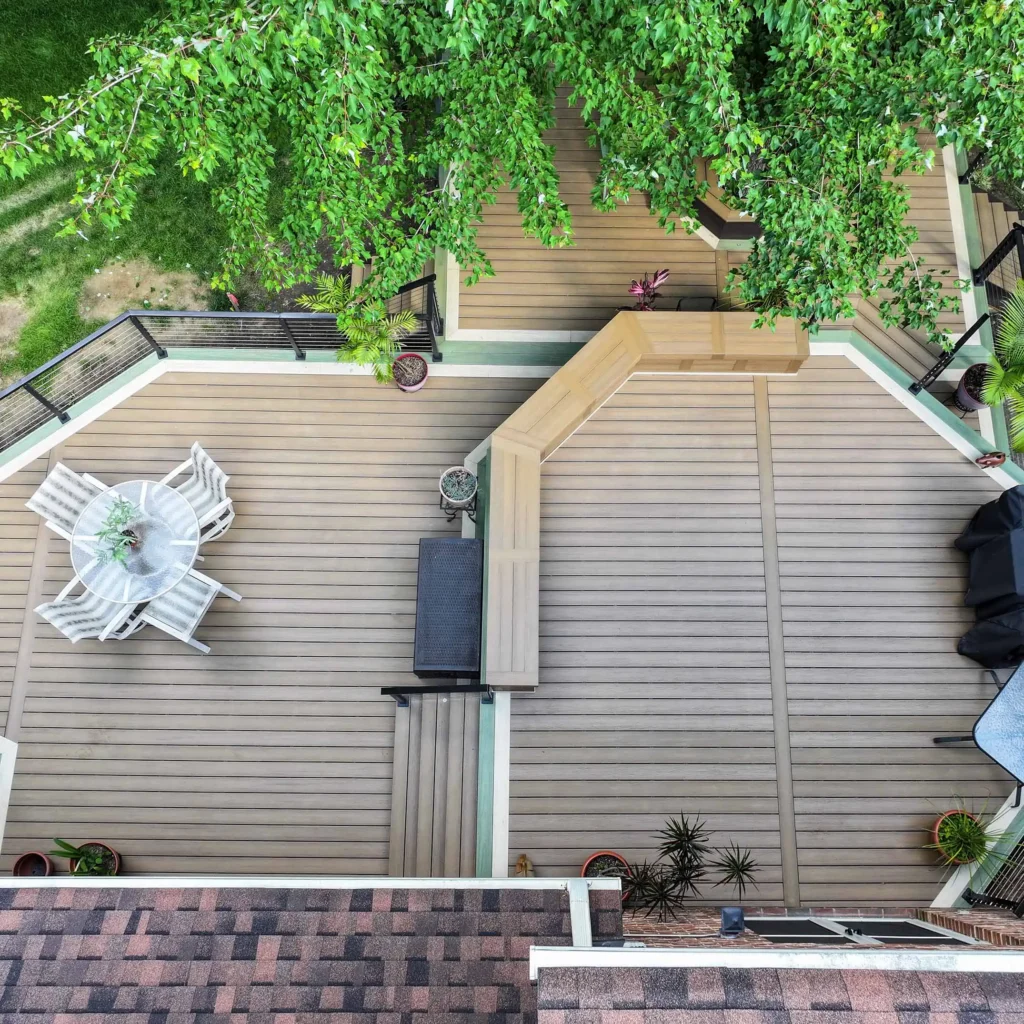
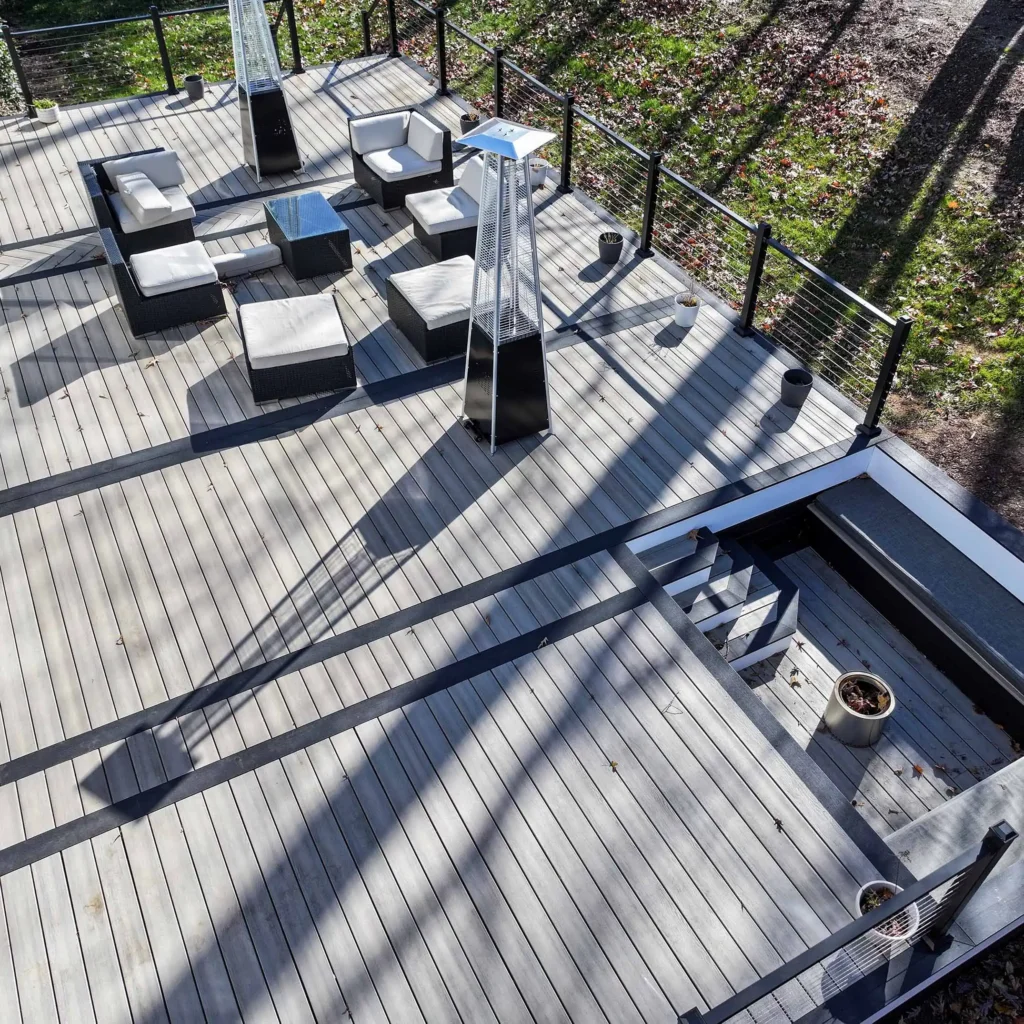
Planning a deck in Charlotte? This guide breaks down today’s custom deck design trends: smarter layouts, mixed materials, modern railings, and built-in lighting, so you can choose ideas that fit your home and life. Why decks in Charlotte are starting to feel like outdoor rooms Around the Queen City, a deck is becoming the place where normal life happens. Morning coffee. Friends over on a Saturday. Kids running in and out while dinner is still on the counter. People are treating decks like outdoor rooms, and it makes sense. When it’s done well, it feels like part of the house, just with better air and a nicer view. That shift shows up in national research too. In the Houzz Outdoor Trends Study, about a third of homeowners said they’re upgrading outdoor areas to extend their living space. If you want the deeper breakdown, the 2024 U.S. Houzz Outdoor Trends Study is worth a quick read. And in areas from SouthPark to Huntersville, Cornelius, Davidson, Matthews, and Lake Norman, you can see the same idea: decks that look and work like real rooms, just outside. Modern layout ideas that flow like a floor plan Most modern deck ideas are really about one thing: make the space feel easy. When you’re planning Custom Decks, layout is the “design” before color or materials even enter the chat. Image credit: Brazawood (3D rendering) Deck zoning that matches how you actually use the space One of the biggest custom deck design trends is zoning. It’s simply giving each activity its own spot so people are not stepping around each other all night. A common layout that works well in Charlotte homes: Dining close to the kitchen door A lounge zone farther out, where it feels calmer Grilling positioned so smoke isn’t drifting into the seating area A quick way to sanity-check the plan is to picture a normal evening. Someone opens the back door with a tray. The dog slips outside. Two people head to the grill at the same time. If the “main path” cuts straight through your lounge chairs, you’ll feel that friction every single weekend. Multi-level decks that do the separating for you A multi level deck is great when your yard slopes, which is pretty common in places like Mint Hill or parts of Concord. Even one step down can create a natural “room” feeling without building walls. Multi-level layouts can also make stairs feel calmer. Instead of one long run, you can break the height into shorter, more comfortable steps and landings. And it helps guests reach the yard without walking through the dining table zone. Built-in seating that keeps walkways open People love the look of built in seating, but the real win is how it clears the floor. A simple bench along the edge can replace bulky chairs and keep the center walkway open. If you’re not sure how everything fits, 3D Renderings help you test layouts and furniture plans before a single board is installed. And during the planning phase, it’s a lot easier to make smart choices when you can actually see the space. Mixed materials that make a deck look custom, not copy-paste If you want “high-end” without shouting about it, mixed materials are one of the simplest upgrades. In its roundup of deck trends, Better Homes and Gardens highlights indoor-outdoor continuity, privacy features, and a growing preference for low-maintenance options like composite and PVC decking. Photo credit: Brazawood Composite decking for the main surface, warmer accents for character Composite is popular because it’s easier to live with. Many homeowners are choosing boards from brands like Trex and Fiberon, and you’ll also see lines like Veranda stocked through The Home Depot. Then you add warmth where it matters: A stained wood privacy screen Cedar post wraps A wood ceiling under a covered portion Color matters too. Lighter tones can feel cooler underfoot in summer, and subtle multi-tone boards tend to hide pollen and everyday dirt better. If you’ve lived through a Charlotte spring, you know why that’s nice. Stone or pavers to make the transition feel intentional A deck feels more “designed” when the ground-level landing is finished. That’s why you’re seeing more decks tied into patios and walkways using stone or pavers. Custom Pavers and Concrete Work can connect the deck to the yard so the whole space feels like one plan. Material comparison in plain English Material option Best for Maintenance feel Budget range (relative) Pressure-treated wood Straightforward builds Needs staining or sealing over time $ Cedar or hardwood Natural warmth and grain Needs care to stay rich-looking $$ to $$$ Composite (like Trex, Fiberon) Low-maintenance lifestyle Wash and basic care $$ to $$$ PVC decking Moisture-heavy areas Very low upkeep $$$ Budgets vary by size, stairs, framing complexity, and finishing details, so use this as a “fit check,” not a quote. Modern deck railing ideas that balance style and safety Railing frames the entire deck, so yes, it’s a design choice. But it’s also a safety choice. If you’re comparing styles, modern railings have come a long way in the last few years. In North Carolina deck code guidance, guards are typically required at a minimum 36-inch height when there’s a 30-inch drop, and stair handrails are generally in the 34 to 38-inch range. (You’ll also see these ideas referenced in Appendix M.) If you’re ever Googling the minimum height of a railing, don’t worry, you’re not the only one. It’s a simple detail that’s easy to mix up. Image credit: Trex Cable railing for a cleaner view If your backyard backs up to trees, water, or a pool, cable railing stays visually light. It’s one of those deck railing ideas that can make the deck feel bigger instantly. If you entertain often, also think about the “feel” of the top rail. A comfortable cap you can rest a hand on sounds small, but it makes the deck feel welcoming. Privacy screens that feel intentional, not boxed-in Privacy is trending for…

How Wellness Zones Are Transforming Outdoor Living in North Carolina

By Brazawood - February 16, 2026

Learn how biophilic deck design and simple wellness zones can turn a North Carolina backyard into a calm retreat this season, with practical ideas for layout, plants, shade, and lighting you can actually use. If you own a mid to high-end home around Charlotte and Lake Norman, you have probably noticed a shift in outdoor living. Decks are not just “a place for the grill” anymore. They are becoming wellness spaces: a quiet coffee corner, a small stretch and breathe spot, a lounge area that feels like a boutique resort. This is a pillar guide, so we will go deep but keep it simple. You will learn what biophilic deck design really means, how wellness zones work, and how to bring it all together with smart materials, plants, and lighting. And if you want to see how these ideas look in real projects, you can always browse our Portfolio. You can also explore our outdoor living services to see what we build most often. Key points What biophilic deck design really means in plain English “Biophilic” sounds fancy, but the idea is pretty natural: people feel better when they are connected to nature. In design terms, it means shaping a space so it supports that connection, even when you are still at home, still busy, still living your regular life. Organizations like the Global Wellness Institute point to biophilic design as a wellness concept that uses nature and natural patterns to support health. And the well-known framework from Terrapin Bright Green explains practical “patterns” designers use, like natural light, views of greenery, and materials that feel warm and organic. For a deck in North Carolina, biophilic design usually comes down to a few things you can actually see and feel: Visual connection to nature, like framing trees, adding a border of plants, or keeping railings open so your eyes reach the landscape. Natural materials and textures, such as wood tones, stone, matte metals, and fabrics that do not feel “plastic” or shiny. Comfortable microclimates, meaning the space is usable when the sun is intense, when mosquitoes are out, or when evenings cool down. And here is the big mindset shift: your deck is not the “product.” The feeling is. A well-planned custom deck is just the platform that helps the feeling happen, day after day. Why wellness zones are showing up across North Carolina In our neck of the woods, people are busy. Work is intense. Schedules are full. So the outdoor space has to do more than look pretty. It needs to support how you actually recover and recharge. There is also real research behind the trend. The World Health Organization has published evidence reviews connecting urban green spaces with health benefits and stress-related pathways. Systematic reviews in sources like NIH PubMed Central also discuss how green space type and quality can relate to health outcomes. But you do not need a journal to feel it. You can test it on a normal Tuesday: step outside, sit in the shade, and listen to birds for five minutes. Your body gets the message. That is why homeowners in places like Charlotte, NC and Huntersville, NC are asking for decks that include “zones” for different moods: social time, solo time, movement, and calm. The simplest way to create wellness zones on a deck If you take one thing from this article, let it be this: wellness zones are not about buying “wellness furniture.” They are about designing for behaviors. Start with three quick questions: When will I actually use this space? Morning coffee, family dinners, late-night quiet time, or all three? Do I want privacy, or do I want openness and views? What is my one non-negotiable feature? A fire pit, a hot tub, a dining table, or a shaded lounge? Once you answer those, you can lay out zones like you would inside a home. A dining zone needs a clear path and enough elbow room. A lounge zone needs softer light and a little separation. A stretch zone needs open floor space, not clutter. Here is a simple “menu” of deck wellness zones you can mix and match. Wellness zone Goal Simple elements Biophilic touch Lighting idea Quiet coffee corner Start the day calm and grounded 2 chairs, small table, side table for a mug or book Planters with soft greenery, a view line to trees, natural textures Warm wall sconce or small downlight, low glare Social dining zone Easy meals and effortless hosting Table for 6 to 8, shade option, clear walk path around chairs Herb pots or climbing vines nearby, wood tone accents String lights under a pergola or soft overhead LEDs Lounge and reset area Unwind after work, slow down Deep seating, outdoor rug, side tables, throw pillows Layered plants at different heights, natural stone or wood details Dimmable LED accents, step lighting for safety Movement corner Stretching, yoga, light workouts Open space, non-slip surface, privacy screen if needed Tall planters or a green screen for a calm backdrop Subtle path lights, keep it soft and even Fire or evening conversation spot Create a cozy end-of-day ritual Fire feature, seating circle, a spot for blankets Stone texture, evergreen planters, warm natural colors Low, shielded lighting that protects the night sky Want to feel confident before construction starts? That is where 3D renderings help a lot. You can see where the sun hits, how wide the walkways feel, and how the zones flow, before anything is built. Biophilic borders: the trend that makes a deck feel grounded One of the easiest ways to make a deck feel “biophilic” is to stop treating it like a floating stage. Instead, you visually connect it to the yard with what we call biophilic borders. This can be as simple as a line of planters, a built-in bench with greenery behind it, or layered landscaping that softens the hard edges of the deck. It is not about turning your deck into a garden. It is about giving your eyes somewhere…

How to Choose the Right Company for a Luxury Outdoor Space

By Brazawood - February 11, 2026

Choosing a deck builder in Matthews or Huntersville, NC is a big decision. In the next few minutes, you will learn how to compare companies, materials, permits, and quotes so your luxury outdoor space feels right and lasts. If you are searching for a deck builder in Matthews and Huntersville, NC, you are probably past the “maybe someday” stage. You want a luxury outdoor space that looks intentional, feels comfortable, and holds up through Carolina heat, humidity, and those pop-up storms that show up out of nowhere. And let’s be honest, a deck is not just a platform. Done well, it becomes the place where mornings start, dinners stretch longer, and weekends feel a little more like a getaway. Done poorly, it becomes the thing you avoid looking at every time you walk into the backyard. Below, I will walk you through what to look for in a builder, what questions actually matter, how to think about premium materials like composite decking, and how to compare quotes without getting overwhelmed. The goal is simple: fewer surprises, better decisions, and a deck you are excited to use. Key points Start with your real life, not just a pretty photo Most people start with inspiration photos, and that is totally normal. But the best projects start with something more useful: how you will actually use the space. Think of this as planning your outdoor living like you plan the inside of your home. Do you picture quiet mornings with coffee and a book? Or are you the “let’s host everyone” house? Do you need space for kids to run around, or a calm spot for two chairs and a small table? Luxury is not always bigger. A well-sized deck that fits your routine can feel more high end than an oversized deck that feels empty. Here is a quick, real-world trick: take painter’s tape, chalk, or even a string and outline the deck size in your yard. Put a couple of chairs inside that outline. Walk around it like you are carrying a tray from the kitchen. You will learn more in 10 minutes outside than in an hour of scrolling. Photo from the Brazawood portfolio. Browse deck layouts and design ideas. Also, pay attention to little “flow” moments. Where will the grill go so smoke does not drift right back into the house? Where will guests enter the deck from? What do you want to see when you step outside, and what would you rather not see? These small decisions are what make a deck feel polished. What separates a great local deck builder from an average one A deck can look beautiful on day one and still be a headache later. The real difference shows up over time. A great builder thinks about the stuff you do not want to deal with later, like how water moves, how everything stays solid, and how the project stays organized from start to finish. One of the easiest ways to spot quality is to notice how a company explains the “boring parts.” If the builder can clearly describe how they handle structure, drainage, and safety without confusing you, that is a good sign. If everything is vague, that is a sign too. It also helps to look at proof, not promises. Ask to see a portfolio with projects similar to yours, and ask what choices were made and why. If you can, meet the team or at least understand who will actually be on-site and who your point of contact is. A strong project feels better planned from the first conversation. And yes, the jobsite matters. Clean, careful work usually comes from a crew that shows up prepared with professional tools and systems. We personally like working with gear from Milwaukee Tools because reliability and precision matter when you are building something that needs to feel perfect. Photo from the Brazawood portfolio. Details like lighting and clean transitions are what make a deck feel high end. If you want a simple set of questions that cuts through the sales talk, these help: Can I see a few projects like mine and hear what challenges came up? Who is my main contact and how often will I get updates? What is included in the quote and what is not? What warranty do you offer on labor and materials? Permits and code basics in Matthews and Huntersville Permits sound intimidating, but they are really just a way to make sure the structure is safe and built correctly. In many cases, a deck that is attached to a home or elevated off the ground will require a permit and inspections. A strong builder will be comfortable talking about this and will handle the process with you. A good place to start for local guidance is Mecklenburg County Code Enforcement. And on the “big picture” side, most local requirements are based on standards developed by the International Code Council (ICC). For North Carolina building code resources and interpretations, the North Carolina Office of State Fire Marshal is a helpful reference. Photo: Scott Graham on Unsplash. Here is the main idea: if a builder suggests skipping permits to “save time,” slow down and ask why. Permits and inspections protect you, and they can matter later during resale. A professional company should be able to build the right way and keep the timeline realistic. Also, do not forget HOA rules if you have them. In some neighborhoods around Charlotte, HOA approval can be just as important as a building permit. A good builder will help you think through both, so your project does not stall halfway through. Choosing decking materials for low maintenance and long term durability Material choice is where “premium design” meets real life. If you love the look of natural wood, you may still choose it, but it usually requires more upkeep over time. If you want a cleaner, low-maintenance lifestyle, composite decking is often the move. Many homeowners in Matthews and Huntersville ask about…

Contact Us

Fill in our form below to get started

Contact Form

This field is for validation purposes and should be left unchanged.
Name(Required)