
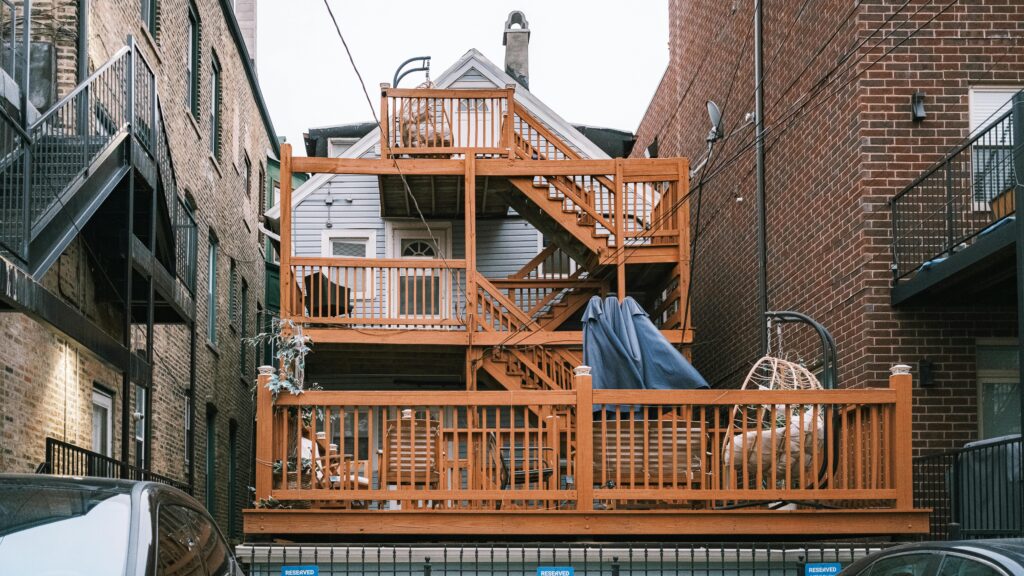
deck repair
Most deck problems do not start with the boards you see. They start below them. In this guide, you will learn how deck drainage, weak ledger flashing, and bad framing lead to rot, movement, and expensive repairs. Why deck drainage, ledger flashing, and framing matter more than the surface boards A lot of homeowners focus on the part of the deck they can see. That makes sense. Color, board pattern, railing style, and lighting are exciting. But the truth is simpler than that. A deck usually fails because of what is happening underneath or where it connects to the house. The American Wood Council guide for residential deck construction calls for corrosion resistant flashing at ledger connections to wood framed walls, and it also says the siding or exterior finish must be removed before the ledger is installed. Trex makes the same point in plain language, noting that proper flashing and attachment help prevent rot and water damage that can weaken the deck to house connection. And that is why this topic matters so much for homeowners in Charlotte, Huntersville, Lake Norman, and nearby communities. A deck can look clean on top and still have moisture trapped below, weak detailing at the ledger, or framing that was sized or connected the wrong way. When that happens, the repair bill usually arrives later, not sooner. By then, it is rarely a small touch up. Based on guidance from the American Wood Council, Trex, and Fiberon, here is a simple homeowner view of the three trouble spots. Problem area What you usually notice first What it often points to Deck drainage Puddles, damp smell, slow drying, dirty buildup under the deck Water is not leaving the surface or the space below it Ledger flashing Staining near the house, soft trim, movement where the deck meets the wall Water may be getting behind the ledger connection Framing Bounce, sagging, rail movement, uneven picture frame lines Joist spacing, beam support, or connector details may be off Deck drainage: where water goes after the rain matters When people hear the word drainage, they sometimes think of a fancy drainage system or a gutter style add on. But basic deck drainage is really about something more everyday. Water has to move off the boards, through the gaps, and away from the framing below. Trex says deck boards need proper gapping for drainage and that all decks need air circulation to help them stay dry. Fiberon says there must be adequate cross ventilation and unobstructed airflow under half of the deck, water must be able to flow away from below, and decking should not be installed directly over an existing or solid surface. For decks with limited ventilation, Fiberon says six inches of clear ventilation is required. That sounds technical, but it plays out in very normal ways. Maybe water sits near the house after every storm. Maybe the area under the deck stays muddy even when the yard around it dries out. Maybe the fascia starts to look tired before it should, or the underside smells a little musty in warm weather. Those are not random annoyances. They are usually signs that moisture is hanging around longer than it should. And when moisture lingers, the structure pays for it. This is also where homeowners get misled by surface upgrades. New boards can make an old deck look fresh, but they do not fix trapped moisture under the frame. In fact, Fiberon says an existing substructure should only be reused when it is free of damage or decay, the joists are spaced correctly, and ventilation and drainage conditions are still adequate. So if the builder never talks about airflow, spacing, or the condition of the framing, that is a warning sign. There is one more detail worth slowing down for. Under deck waterproofing can be useful, especially if a homeowner wants a dry patio or storage space below. But it has to be planned well. Fiberon warns that under deck waterproofing installations that do not provide the required unobstructed ventilation can contribute to heat buildup and damage. In plain terms, adding a system under the deck is not automatically a win. If it blocks airflow or traps moisture, it can create a new problem while trying to solve another one. That is why planning matters so much on the front end. Good Custom Decks are not just attractive on top. They are built so water has somewhere to go. And honestly, this is one of the best reasons to use 3D Renderings during design. They help you see the layout, stairs, transitions, and drainage paths before construction starts, while changes are still easy. Ledger flashing: the small detail that protects the whole connection If drainage is about how water leaves the deck, flashing is about how water stays out of the house. And around here in the Carolinas, that matters more than most people realize. The ledger is the board that connects many decks to the home. If water gets behind that area, it can damage the wall assembly and weaken one of the most important structural connections in the whole project. The American Wood Council requires approved corrosion resistant flashing at ledger connections to wood framed walls. Trex goes further in its installation guidance and says the ledger should never be attached over siding or directly to cladding like brick. Instead, the ledger should anchor through the wall sheathing into the rim or band joist, with proper back flashing, top flashing, and overlap with the weather resistive barrier. A simple way to picture flashing is this. Think of it like a rain jacket for the most sensitive seam in the project. Water will always try to follow gravity and sneak through openings. Flashing tells it where to go instead. When it is done well, water passes over the connection and away from the wall. When it is skipped, cut short, or installed in the wrong order, water can work its way behind…
Contact Us
Fill in our form below to get started